EU Ministers Propose Centralized Oversight for Financial and Crypto Firms
EU finance ministers have agreed on a plan to centralize the oversight of major cross-border financial firms and select crypto-asset providers under the ESMA regulator.

EU finance ministers have agreed on a plan to centralize the oversight of major cross-border financial firms and select crypto-asset providers under the ESMA regulator.

ESMA has initiated a review to determine if tokenized versions of eligible collateral can maintain liquidity and legal enforceability during market breakdowns.

ESMA is evaluating the risks of tokenized collateral to ensure clearinghouses can maintain liquidity and legal certainty during market crises.

EU crypto platforms must remove unauthorized stablecoins within three months to comply with the new MiCA regulatory framework.

ESMA has set a January 8, 2027, deadline for MiCA-licensed crypto firms to phase out support for non-compliant stablecoins, including Tether’s USDT.

ESMA has ordered EU crypto firms to stop supporting non-MiCA-compliant stablecoins, setting a January 8, 2027, deadline to resolve all existing exposures.

Bitpanda co-CEO Christian Trummer reports that the MiCA framework has increased user trust in regulated crypto platforms, while calling for stricter enforcement against unauthorized firms.

European regulators are investigating Binance for continuing its operations in the EU by utilizing the reverse solicitation exemption after failing to secure a MiCA license.

ESMA is pushing for broader enforcement powers, including asset freezes and website blocking, to strengthen the oversight of crypto markets under the MiCA framework.

ESMA is shifting its MiCA strategy toward strict enforcement and the harmonization of supervisory practices across the EU as the transition period for crypto-asset service providers concludes.

ESMA is shifting its MiCA strategy from rulemaking to active supervision, with a 2027 work program focused on operational resilience, harmonized reporting, and crypto-market surveillance.

ESMA will introduce a new supervisory priority in 2027 to regulate the use of AI and tokenized assets by financial firms across the European Union.

Starting in 2027, ESMA will prioritize the supervision of AI and tokenization across the European Union to address risks in financial services.

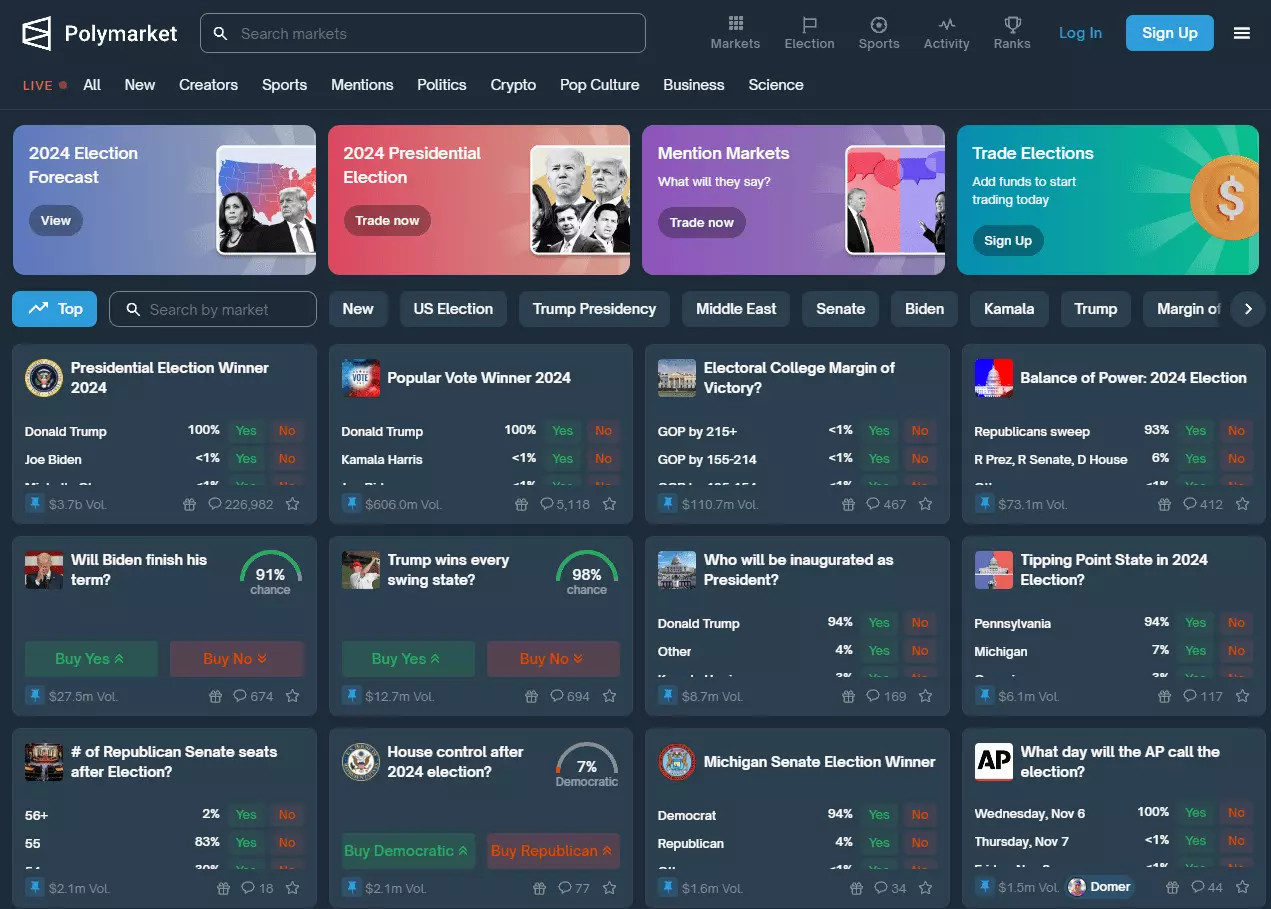
Prediction market Polymarket is lobbying European and UK regulators to be classified as a financial services firm instead of a gambling platform.

Traditional banks now account for nearly 23% of crypto-asset service providers in the EU's MiCA register, with German institutions leading the expansion.

The number of banks registered under the EU's MiCA framework has doubled since late June, with traditional lenders now accounting for nearly 23% of all listed crypto service providers.

EU regulator ESMA warns that prediction markets are plagued by insider trading and manipulation, despite a massive surge in global trading volumes.

ESMA has challenged the operations of Polymarket and Kalshi in the EU, citing a lack of required licenses and concerns over market manipulation and regulatory compliance.

ESMA warns that increasing links between crypto markets and traditional finance could amplify systemic risks and complicate regulatory oversight.

ESMA has classified prediction market contracts as derivatives, effectively banning them for retail investors in the EU and creating significant compliance hurdles for platforms.