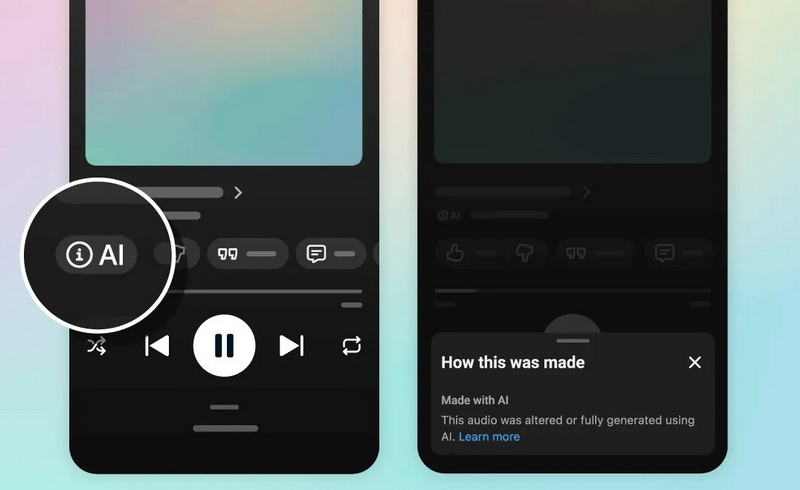
YouTube Music is introducing a labeling system to identify tracks created with generative artificial intelligence. These labels will appear on the player page in both the YouTube Music and main YouTube applications, providing users with details on how AI was utilized in the composition or vocal production.
Partners can categorize content into three options: fully generated by AI, partially generated by AI, or no AI usage. Tracks using tools like Auto-Tune for pitch correction are classified as having no AI usage. Unlike some competitors, YouTube does not restrict monetization for AI-assisted tracks.
Other streaming platforms are adopting different strategies. Apple Music plans to introduce AI labels by the end of the year. Spotify uses specific designations and filters to combat spam. Deezer and TIDAL label fully AI-generated tracks, exclude them from recommendations, and withhold royalty payments for such content.
Deezer reports receiving approximately 90,000 fully AI-generated tracks daily. In contrast, YouTube focuses on transparency and continues to experiment with its own AI tools, such as Dream Track, which allows selected creators to generate music using AI-modeled voices of participating artists.