

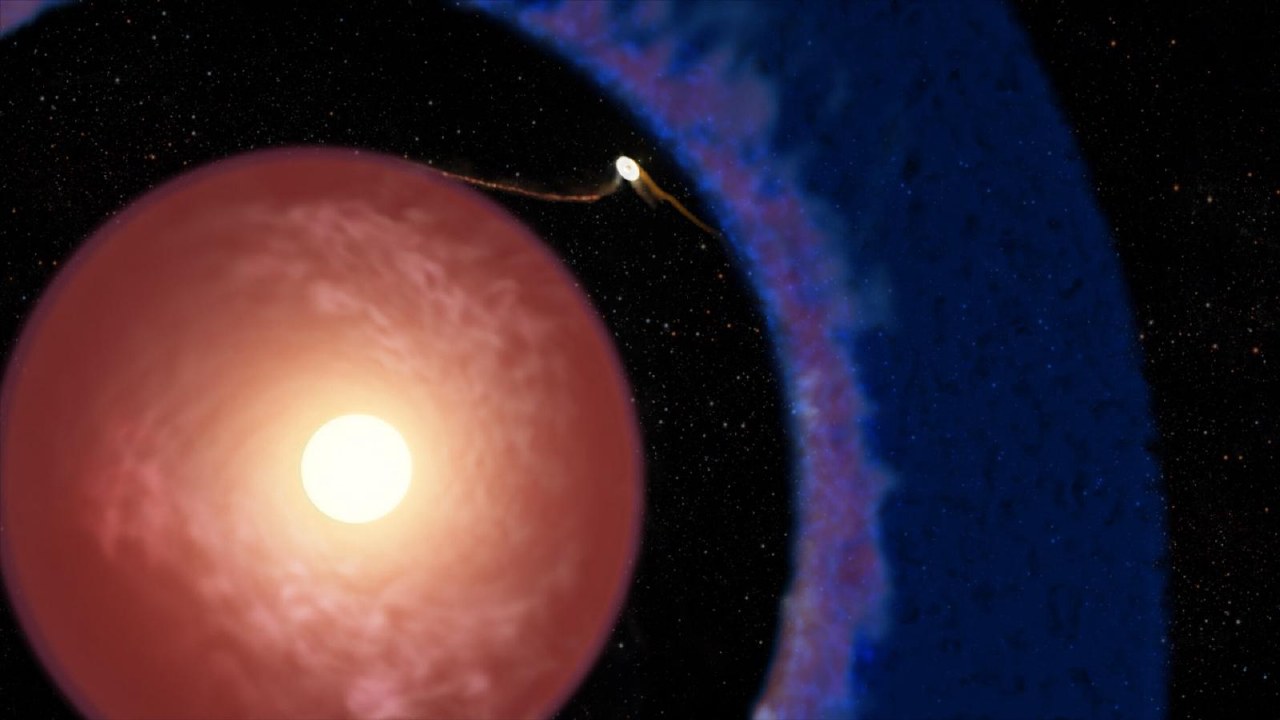
Astronomers have confirmed the existence of Elias 2-24 b, the youngest exoplanet ever discovered. This gas giant is less than one million years old, significantly younger than previous record holders like PDS 70 and WISPIT 2, which are over five million years old.
The planet is located 55 astronomical units from its host star, a distance ten times greater than that between Jupiter and the Sun. Current scientific models suggest that forming such a massive object should take at least five million years, creating a fundamental discrepancy.
Researchers identified the planet by analyzing data from the ALMA radio telescope array, the Very Large Telescope, and the Keck Observatory. By comparing images from 2018 and 2020, the team tracked the object's movement and confirmed its planetary nature with a confidence level exceeding 3σ.
The mass of Elias 2-24 b is estimated to be between 1.9 and 4 Jupiter masses. Experts note that this figure may be an upper limit, as accretion-related luminosity in such a young object can interfere with photometric measurements.
The planet's formation likely occurred via core accretion rather than gravitational instability. The discovery suggests that giant planets can form five times faster than previously assumed, and future observations will utilize the Nancy Grace Roman space telescope.


