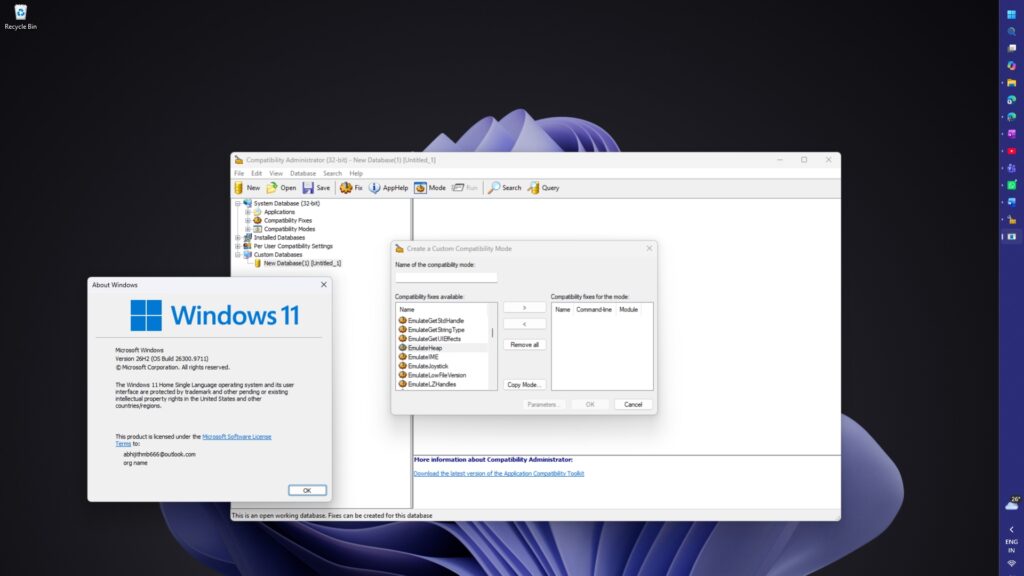
Microsoft continues to include the EmulateHeap compatibility component in the latest Windows 11 26H2 version. This legacy code, which manages memory heaps, dates back to the Windows 95 era.
The component originated as a workaround for the game SimCity, originally developed for Windows 3.x. The game contained a use-after-free vulnerability that caused crashes when Microsoft updated its memory management system in Windows 95.
To resolve the issue without requiring developers to patch the game, Microsoft implemented specific code that delayed memory deallocation. Later, the company expanded this approach for Windows XP by creating a broader compatibility framework based on the Windows 95 source code.
When legacy applications call specific memory APIs like HeapCreate, LocalLock, or GlobalReAlloc, the system redirects these requests to the EmulateHeap component. This mimics the behavior of the Windows 95 memory manager.
In current Windows 11 builds, this legacy code remains inactive by default. It is only loaded from the disk if an application specifically requires the EmulateHeap fix. Users can inspect these compatibility settings using the Compatibility Administrator tool found in the Windows ADK.