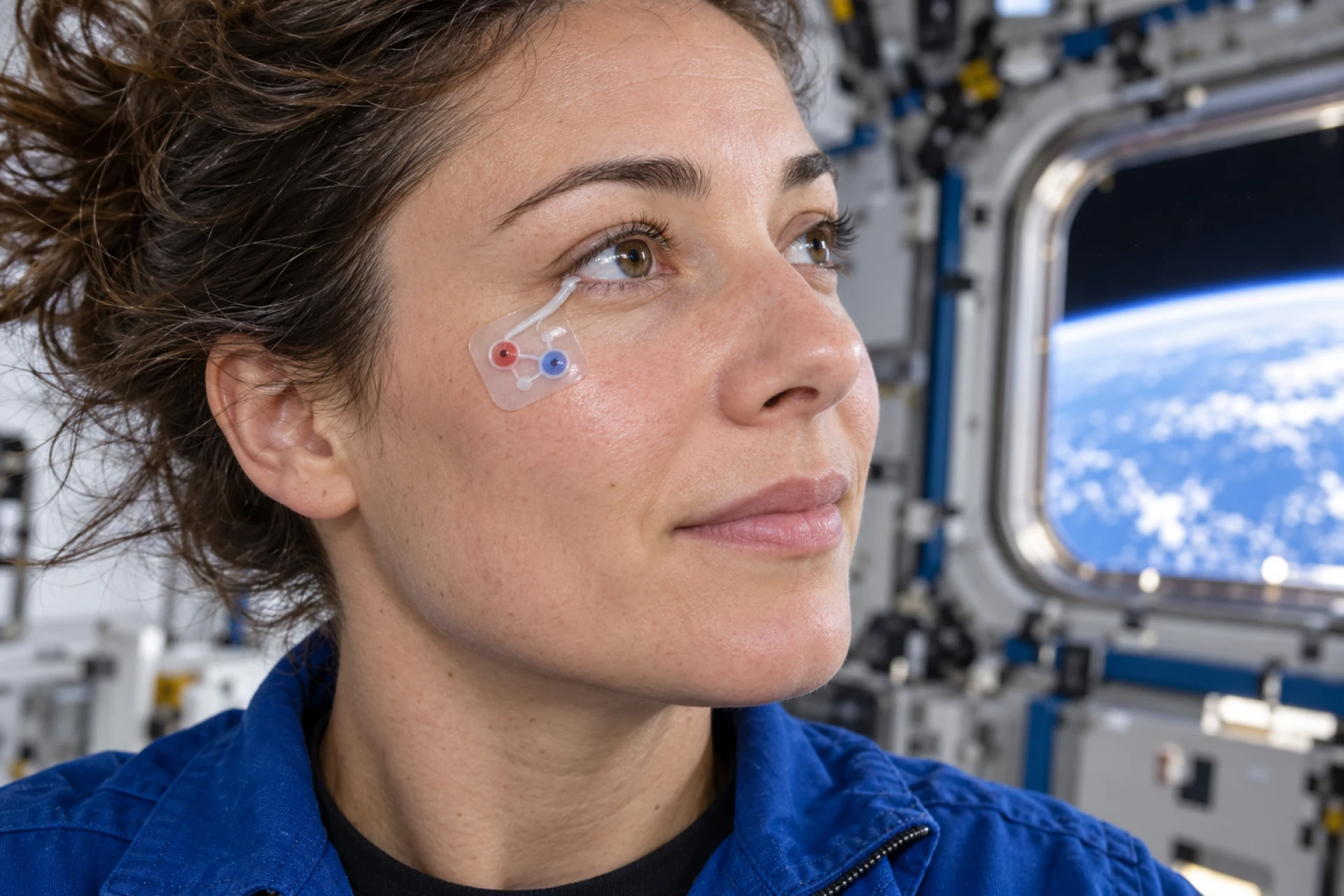
Researchers from the Korea Advanced Institute of Science and Technology (KAIST) and Seoul National University Bundang Hospital have developed a wearable microfluidic eye drop patch. The device is designed to assist astronauts in administering medication precisely in microgravity environments.
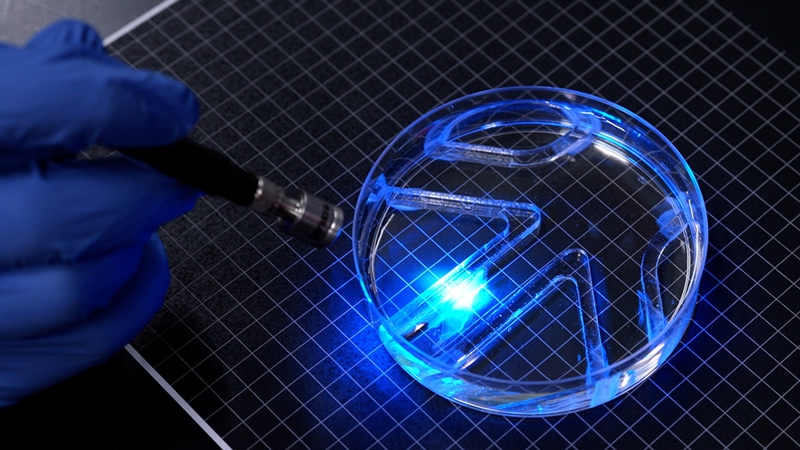
The patch is approximately the size of a thumbnail and is constructed from flexible, biocompatible polymers. It features three internal chambers connected by microchannels, housing pre-moistened fabric, a foaming agent consisting of vitamin C and baking soda, and 20 microliters of eye drops.
To operate the device, the user presses an activation area on the patch. This action forces water into the foaming agent chamber, triggering a chemical reaction that produces carbon dioxide. The resulting gas pressure pushes the medication through the microchannels to the corner of the eye.
The system operates without electricity, external pumps, or the need for gravity. Ground-based experiments conducted under varying gravity conditions demonstrated stable drug delivery performance, with human tests showing results comparable to traditional eye drop methods.
While the initial research has been published in the journal Sensors and Actuators B: Chemical, the team notes that the patch has not yet been tested in actual space or simulated microgravity conditions. Further testing is required before practical application.