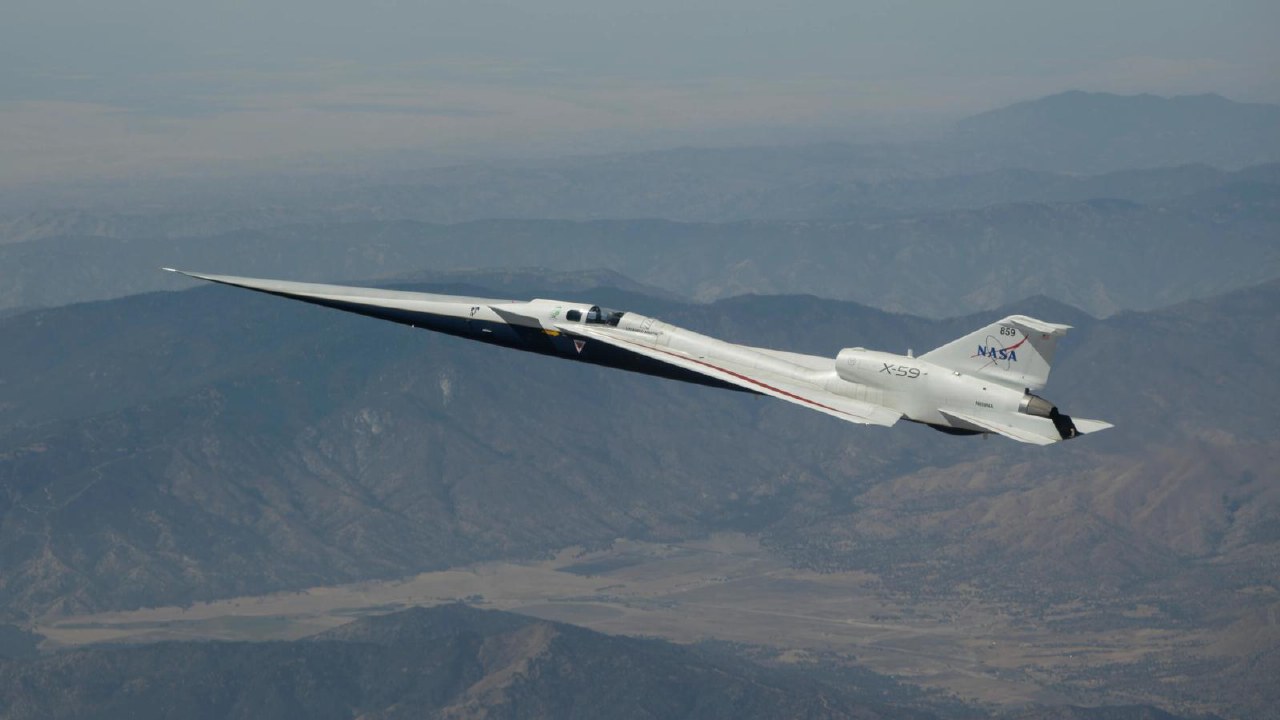
NASA conducted a new test flight of the X-59 experimental aircraft on October 21. The flight lasted one hour, reaching a speed of 1.4 Mach, which is approximately 1500 km/h, at an altitude of 16.8 km. The aircraft took off from the Armstrong Flight Research Center in Edwards, California, following scheduled maintenance and system checks.
The X-59 is designed to study quiet supersonic flight over land. Its elongated nose aims to mitigate shockwaves, reducing the sonic boom to a quieter sound. The cockpit lacks a traditional windshield, utilizing an External Vision System that displays 4K video from external cameras to the pilot.
To optimize development costs and timelines, NASA integrated components from existing aircraft, including the landing gear from an F-16 and an ejection seat from a T-38. The propulsion system features a General Electric F414 engine, providing approximately 22 000 pounds of thrust with afterburners.
The Quesst program's next phase involves test flights over populated areas in the United States. Researchers will gather data on public perception of the aircraft's noise levels. These findings will be submitted to aviation regulators to establish new noise standards and potentially revise current restrictions on commercial supersonic flights over land.