

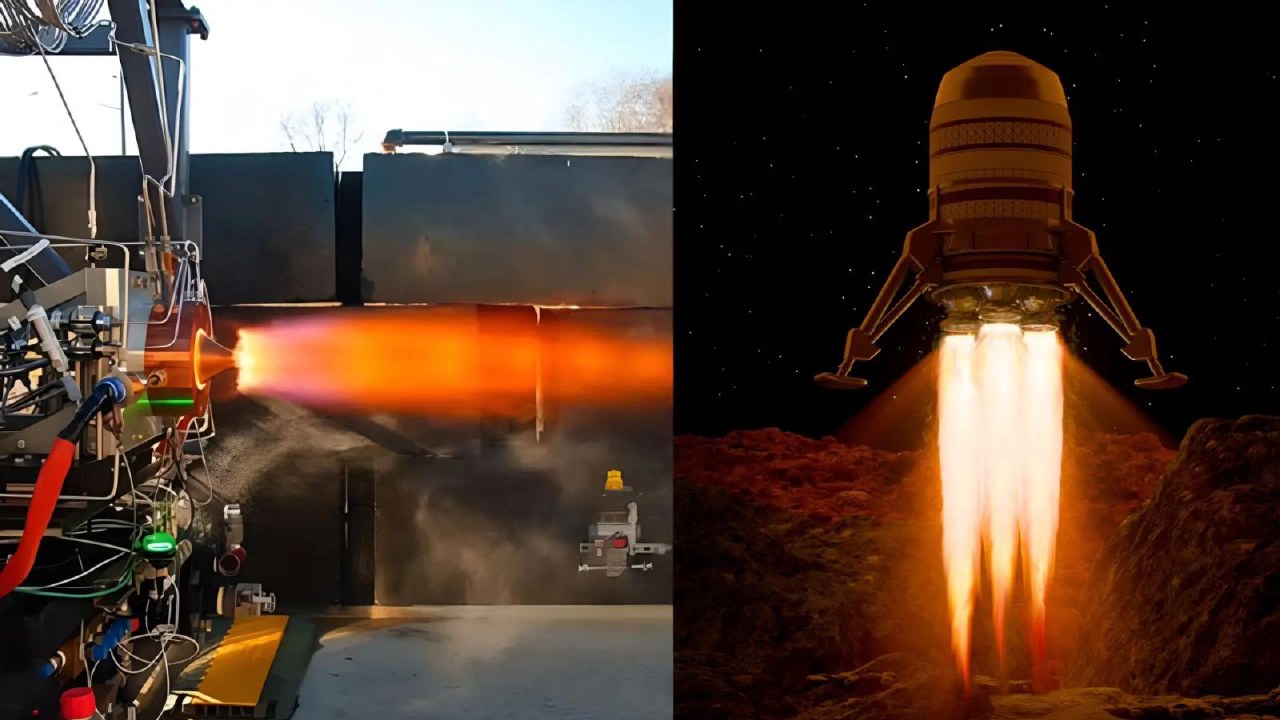
Venus Aerospace has launched a new test stand for its rotating detonation rocket engine at the Houston Spaceport in Texas. The facility is designed to support longer firing tests and higher thrust levels, allowing the company to simulate real-world flight conditions more accurately. The infrastructure will serve as a primary tool for refining the propulsion system.
The company demonstrated the capabilities of the new stand on September 10 with a successful engine firing. Unlike traditional rocket engines that rely on continuous combustion, this technology utilizes rapidly moving detonation waves. This approach is intended to improve overall engine efficiency, though engineers must still prove its long-term stability and durability under extreme conditions.
The development of this facility was supported by the Texas government and the Texas Space Commission through the Space Exploration and Aeronautics Research Fund. Venus Aerospace confirmed that the construction was completed on schedule and within the allocated budget. The company previously conducted its first flight test of the technology in May 2025.
In addition to infrastructure expansion, the company continues to secure funding for its engine program. In 2026, Venus Aerospace raised $91 million in investments. Future testing phases will involve gradually increasing the duration and load on the engine before proceeding to subsequent flight tests to transition the experimental unit into a functional system.



