A new analysis by Transport & Environment (T&E) indicates that electric vehicles retain their value significantly better than current industry estimates suggest. The study highlights that the perceived depreciation gap between electric and combustion-engine cars is largely due to flawed calculation methods used by the leasing sector.
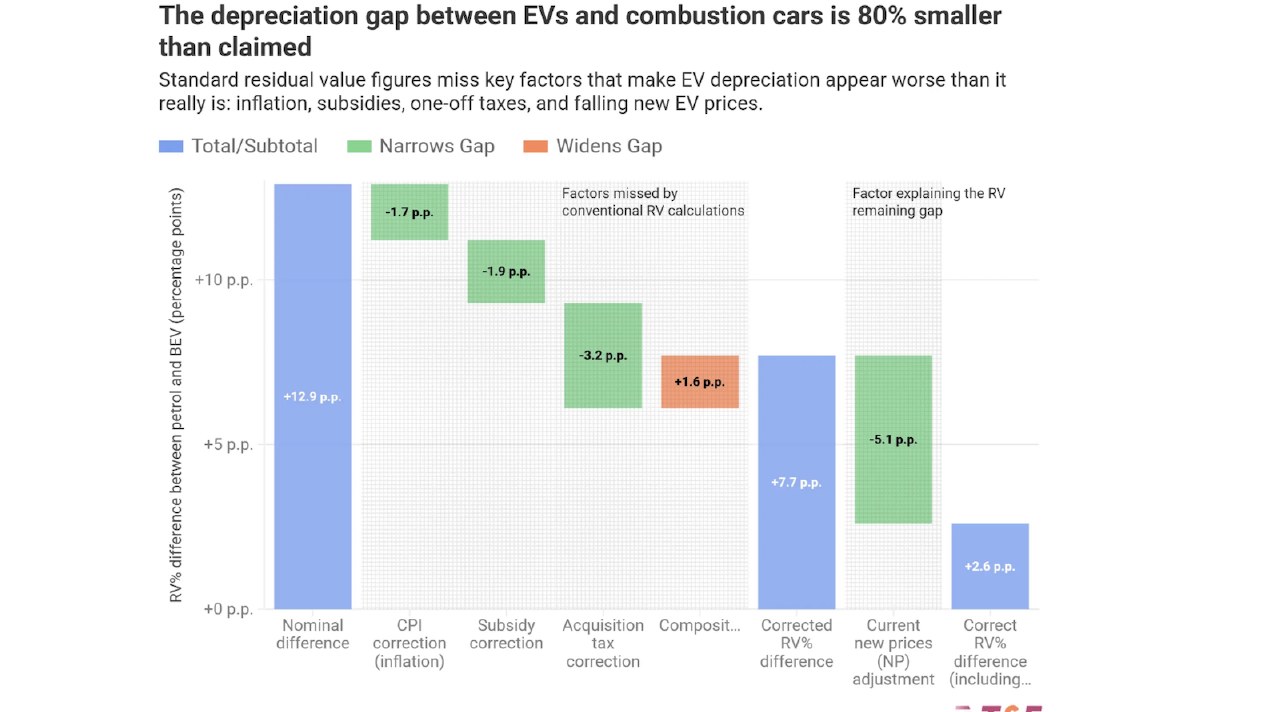
Data from 2025 across Germany, France, Italy, and Spain initially showed a 12.9 percentage point depreciation gap. However, when accounting for five omitted variables—including subsidies, acquisition taxes, inflation, and fleet composition—this gap narrows by 80% to just 2.6 percentage points.
The report suggests that leasing firms should extend lease terms to meet rising demand for used EVs. Meanwhile, automakers are urged to implement standardized battery health certificates. In the UK and EU, the company Arval has already issued over 30 000 such certificates to improve buyer confidence.
Market data from 2026 supports these findings. In Germany, sales of used battery-electric vehicles rose by 64% year-on-year during the first seven months of 2026. In Ireland, the value of used electric cars grew at nearly double the rate of petrol and diesel vehicles as of July 2026.
T&E advocates for the adoption of the Corporate Clean Vehicles Regulation (CCVR) to set mandatory electrification targets for large corporate fleets. According to Stef Cornelis, director of Electric Fleets and Freight, such policies will create market predictability and reduce depreciation volatility.