

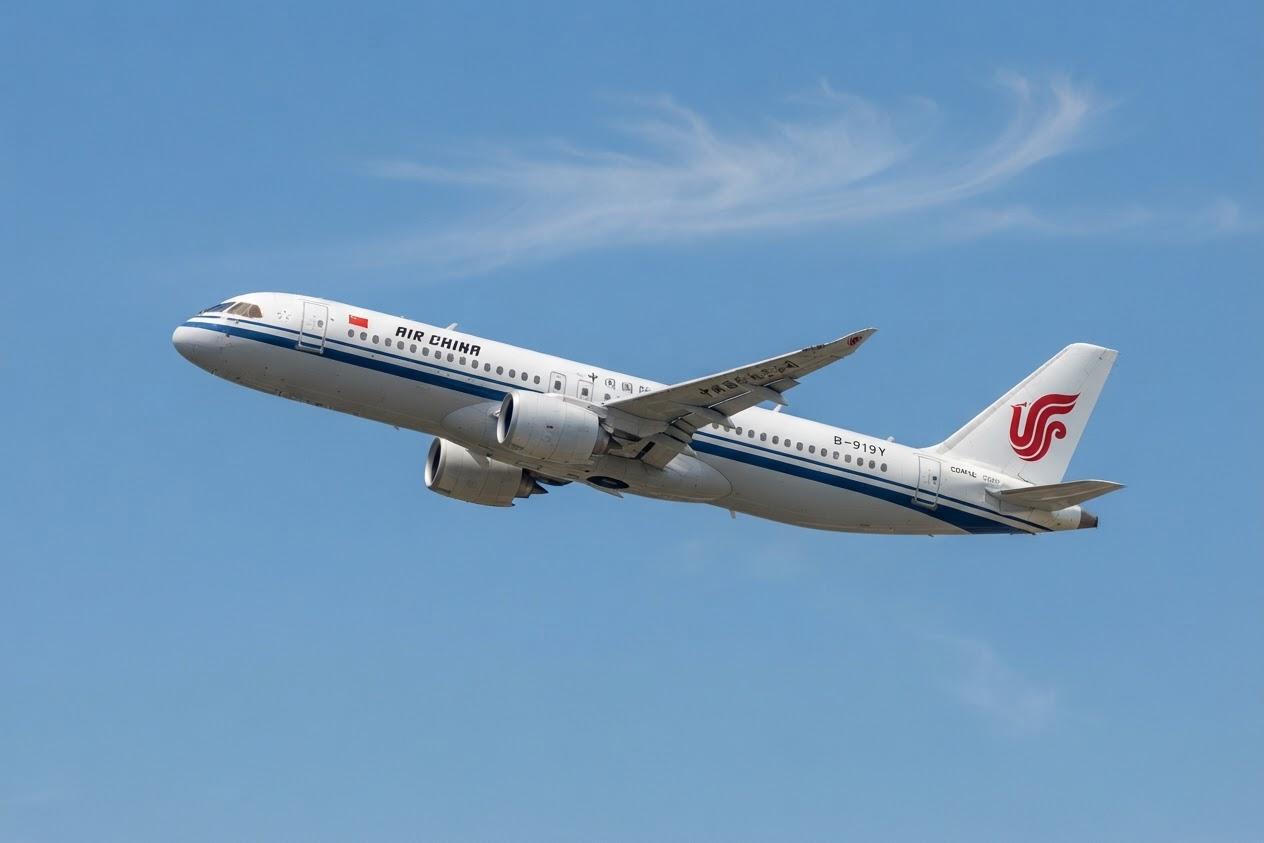
The US Department of Commerce has slowed the approval of export licenses for aviation components destined for China. This shift in policy directly impacts the production of the COMAC C919, a narrow-body passenger aircraft designed to compete with the Boeing 737 and Airbus A320.
The C919 relies heavily on foreign technology, including Leap-1C turbofan engines from CFM International, a joint venture between GE Aerospace and Safran. The aircraft also depends on imported avionics and hydraulic systems, making it vulnerable to supply chain disruptions caused by these export delays.
In response to the potential for further restrictions, China is accelerating efforts to localize production. The Aero Engine Corporation of China is developing the CJ-1000A engine as an alternative to the Leap-1C, while domestic manufacturers work on local substitutes for sealants, fasteners, and paints.
COMAC faces significant production challenges, with a backlog exceeding 1000 aircraft. In 2025, the company delivered only 15 planes against a target of 75. The trend continued into 2026, with only three units delivered during the first quarter.


