

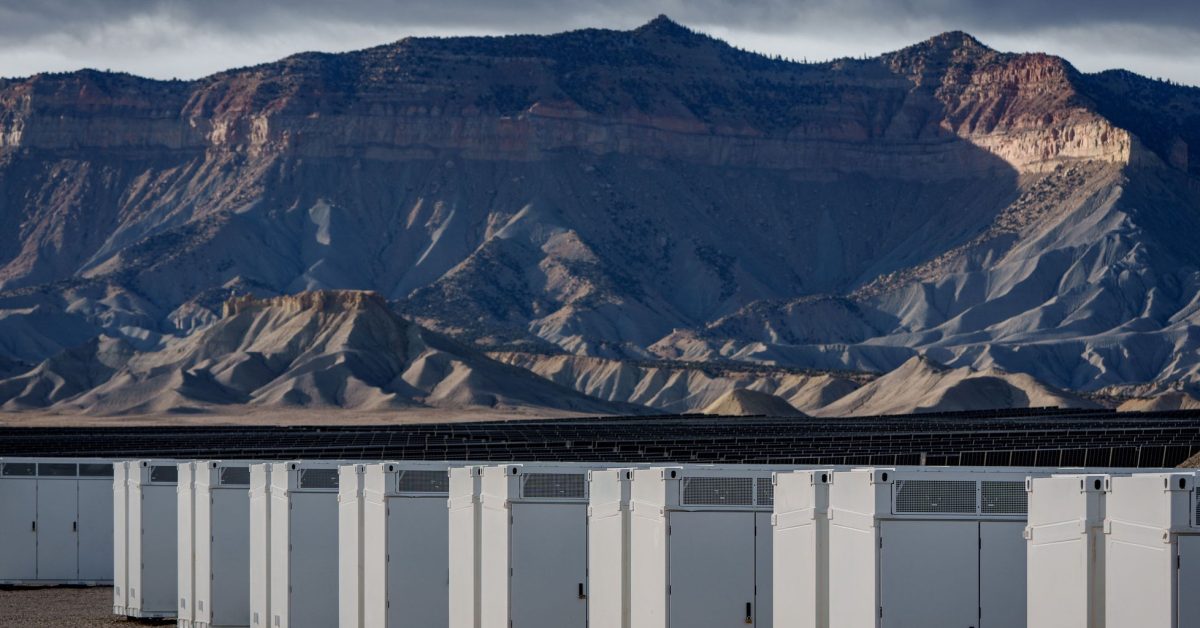
The US battery storage market reached a record high in the second quarter of 2026, adding 20.2 GWh of new capacity. Total installations for the first half of the year reached 30.8 GWh, marking a 23% increase compared to the same period in 2025.
Utility-scale projects dominated the growth, accounting for approximately 18 GWh of the Q2 installations. This was driven by seven large-scale projects in Arizona, California, and Utah. Arizona recorded its strongest quarter ever with 6.2 GWh, while Texas and California added 3.8 GWh and 3.6 GWh respectively.
Of the utility-scale capacity, 44% was paired with solar energy, while 56% was standalone storage. More than 74% of the capacity installed in Q2 was located in states won by Donald Trump in the 2024 election. Utility-scale capacity grew from 88 GWh to 165 GWh during the first 18 months of the Trump administration.
In contrast, residential battery storage declined by 27% year-over-year, adding only 657 MWh in Q2. This drop is attributed to the removal of the federal 25D residential clean energy tax credit. Benchmark Mineral Intelligence forecasts residential installations to fall by 16% in 2026 after a 56% jump in 2025.
Commercial and industrial storage added approximately 1.8 GWh in Q2. Future demand is expected to be driven by data centers combining batteries with solar, wind, and natural gas. Benchmark has raised its 2030 storage forecast by 11.5% to 683 GWh, expecting 71 GWh to be installed in 2026.
Tesla expanded its manufacturing capacity by bringing its third Megafactory online in Texas. The facility is capable of producing 50 GWh of Megapacks annually and has begun shipping units containing domestically manufactured lithium iron phosphate cells.



