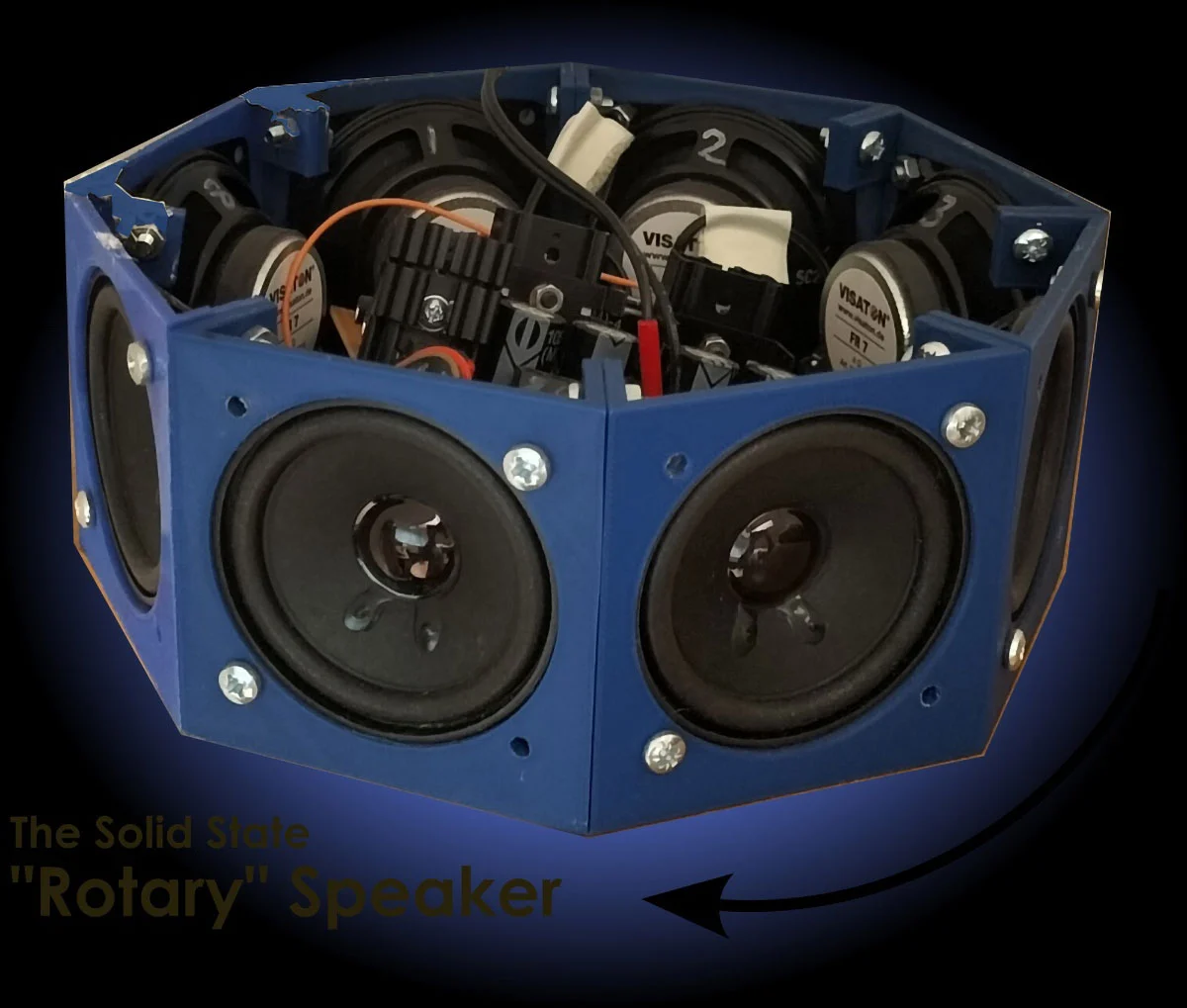
Researchers at the University of Nottingham have developed a solid-state rotary speaker system that eliminates the need for motors, belts, or moving parts. The technology uses a circular array of stationary speakers to manipulate sound waves in physical space, creating the auditory effect of a moving sound source.
The system draws inspiration from the 1930s Leslie speaker, which traditionally relied on mechanical rotation to produce spatial sound variations. Unlike digital effects that process audio signals, this method controls the timing and phase of multiple speakers to manage how sound waves interfere and propagate toward the listener.
Assistant Professor Fernando Perez-Cota noted that this approach bridges the gap between mechanical acoustic methods and modern digital signal processing. By using software to control the speaker array, the system can simulate complex movement patterns, speeds, and directions that were previously difficult to achieve with mechanical hardware.
The research, authored by Nicholas Wolstenholme and Fernando Perez-Cota, was published in the Audio Engineering Society Journal. The team suggests that the technology could eventually be used in music production, live performances, and immersive audio applications, offering a more reliable and scalable alternative to traditional mechanical systems.