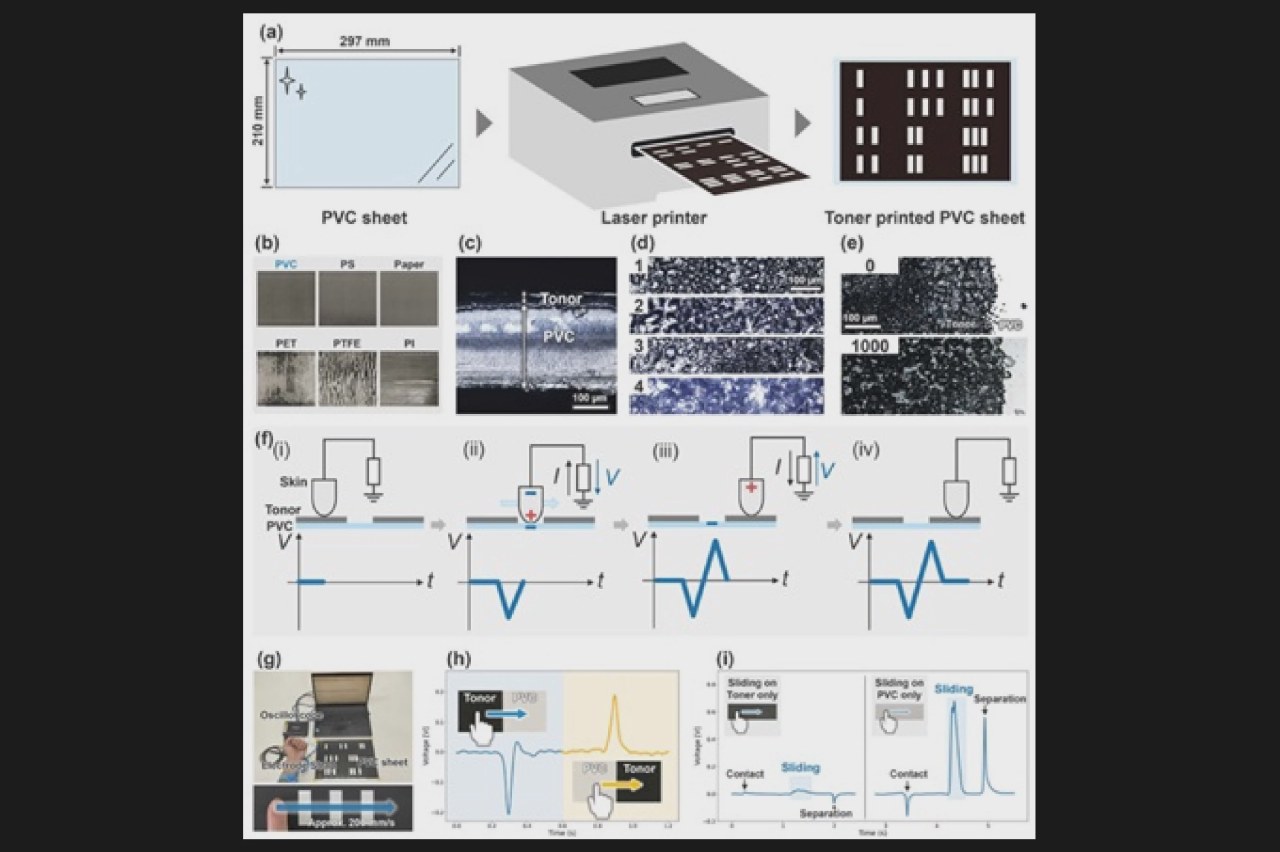
Researchers have developed a low-cost method to create interactive touch interfaces using standard laser printers, toner, and PVC film. The process leverages the conductive properties of printer toner to form sensor networks directly on the plastic surface, eliminating the need for specialized electronics or cleanroom environments.
The manufacturing process takes only a few minutes and allows for the creation of custom-shaped touch buttons, sliders, and interactive panels. Because the conductive patterns are printed on flexible PVC, the resulting interfaces can be applied to curved or irregular surfaces, making them suitable for wearable devices and smart packaging.
This technology aims to simplify rapid prototyping for laboratories, makers, and small businesses by bypassing traditional, time-consuming production cycles. Designers can print and test interactive layouts on demand, significantly reducing development costs for human-machine interface systems.
Future research is focused on expanding the technique to additional flexible substrates beyond PVC. The team is also working to enhance printing precision to support advanced features such as multi-touch input, pressure sensitivity, and more complex user interactions.