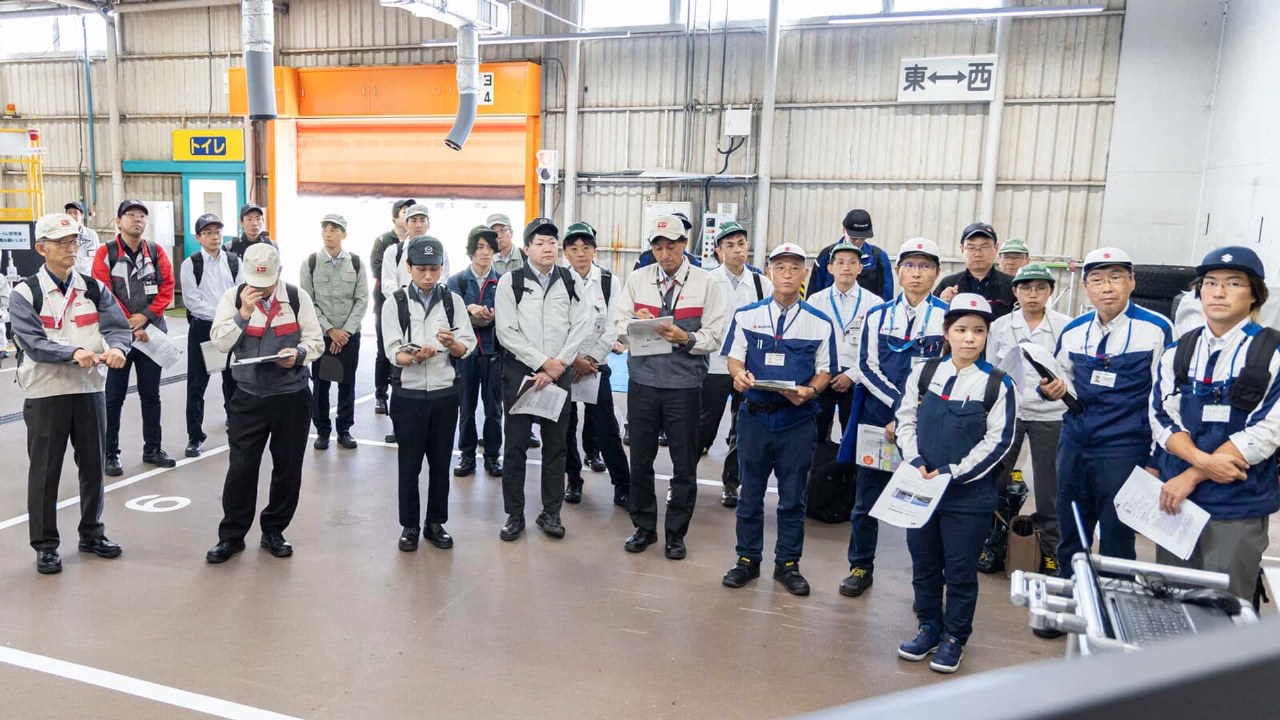
In late July, representatives from Toyota, Honda, Mazda, Suzuki, and Mitsubishi met at Toyota’s Tahara factory to discuss quality standards. The meeting involved over 100 industry professionals focused on the Smart Standard Activity (SSA) initiative, which aims to reduce waste by eliminating unnecessary rejections of parts with minor cosmetic defects.
The initiative began as a Toyota project in 2017. By April 2025, the Japan Automobile Manufacturers Association and the Japan Auto Parts Industries Association formed a joint working group. This group issued an SSA Promotion Declaration to standardize quality requirements for shared suppliers, preventing them from having to manage different specifications for each automaker.
Toyota reported that its internal SSA program reached approximately 7,500 cases by the end of 2025, with 67 percent of proposals adopted. The company aims to scale this approach to improve the competitiveness of the Japanese automotive supply chain, which employs about 5.5 million people, amid rising global competition.
The collaboration focuses strictly on non-competitive areas like manufacturing processes and appearance quality, excluding sensitive topics such as pricing or proprietary technology. Similar cooperative efforts include a 2024 partnership between Toyota, Mazda, and Subaru to develop next-generation combustion engines while maintaining unique brand technologies.