

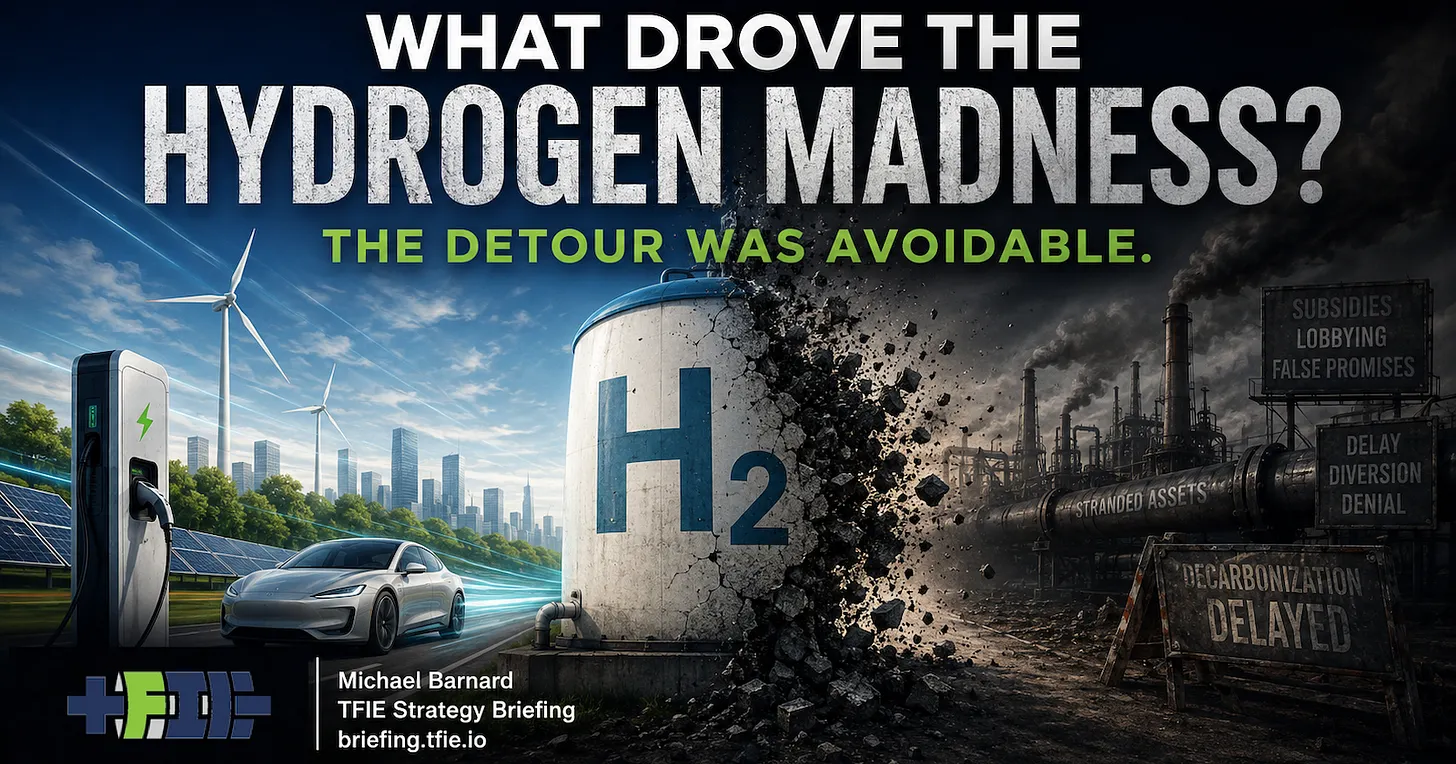
A 2003 thermodynamic study highlighted that hydrogen production, storage, and transport are significantly more energy-intensive than direct electrification. Despite this, the industry continued to pursue hydrogen projects, even as project costs observed by 2025 exceeded major institutional forecasts.
The persistence of hydrogen initiatives is linked to the preservation of existing assets. Gas companies sought to maintain the value of pipelines and reserves through blue hydrogen, while legacy automakers aimed to protect investments in combustion-related infrastructure against the shift to battery-electric vehicles.
Government policy played a critical role in sustaining these projects. The European Court of Auditors noted that EU hydrogen targets were established without robust analysis, yet these goals influenced investment decisions worth billions of euros and years of industrial planning.
The lack of stopping rules allowed the cycle to continue. Subsidies for production, demand support, and infrastructure expansion were implemented to justify underperforming projects. This created a self-reinforcing ecosystem where the initial viability of hydrogen for specific applications was rarely re-evaluated.