

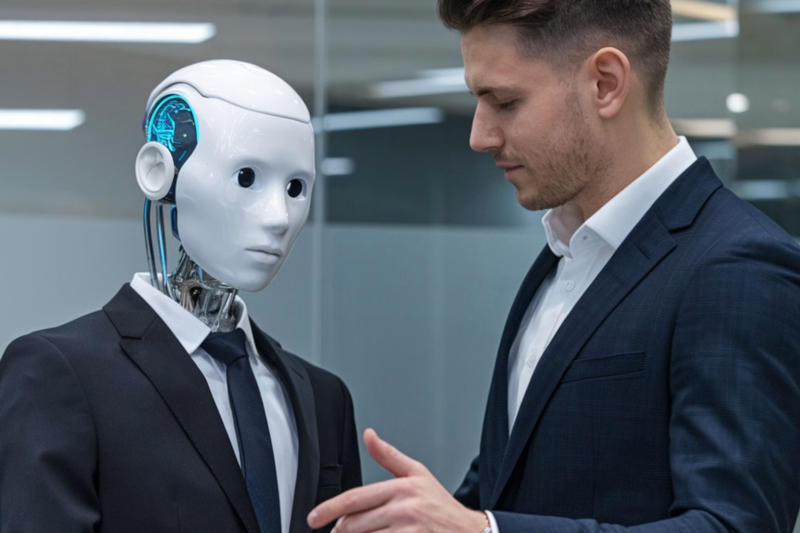
Professionals across various sectors report adopting linguistic patterns characteristic of large language models in their daily communication. Sara Wimmercranz, a venture firm partner in Stockholm, noted that she has begun using contrast framing techniques typical of AI chatbots during office meetings.
Will Barnett, a recruiter in the San Francisco Bay Area, observed that his professional email and messaging correspondence has become increasingly formal and impersonal. He now actively edits his own writing to remove traits that mimic AI-generated content to maintain a human tone.
Allie K. Miller, an AI consultant, highlighted the shift toward a direct, concise communication style known as 'caveman language,' often used in prompts. Participants in meetings now frequently demand clear goal definitions, mirroring the way users interact with AI agents to improve meeting summaries.
In San Francisco, AI startup executive Deepan Mehta introduced a penalty system for employees who use AI-specific jargon in verbal communication. Meanwhile, public relations professional Angela Nibs noted that executives increasingly rely on corporate buzzwords and structured lists, complicating efforts to maintain authentic communication.


