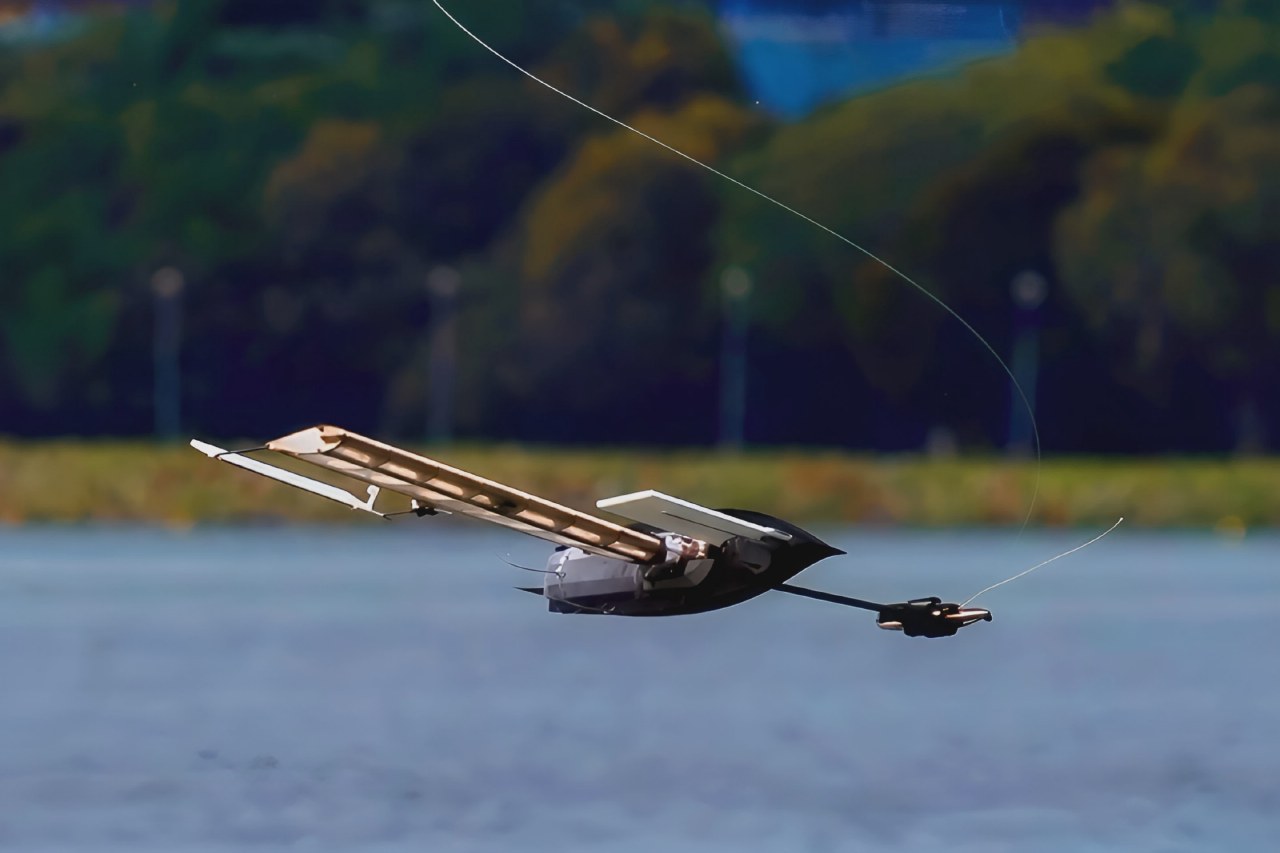
The Singapore University of Technology and Design (SUTD) has developed ALBATROSS, an airborne, buoyant, autorotating sailing sensor platform. The robot is designed to be deployed from aircraft, descending like a maple seed before transitioning into a wind-powered sailing vessel to monitor remote ocean areas.
The platform features two rigid wing sails that serve a dual purpose: they stabilize the descent through passive autorotation and act as propulsion once the device reaches the water. This design eliminates the need for parachutes or complex landing gear. The system uses a fish-tail inspired rudder for navigation.
During tests, a prototype was released from an altitude of 150 meters, demonstrating successful landing, self-righting, and autonomous navigation. Researchers estimate that the autorotation system reduces impact energy by approximately 18.5 times compared to a platform without such deceleration mechanisms.
Field tests conducted in a Singapore reservoir saw a larger prototype reach speeds of approximately 1 kilometer per hour and operate continuously for 3 hours. During these trials, the robot successfully collected environmental data, including temperature, humidity, and wind direction.
The team plans to transition the platform to open ocean environments, focusing on improving structural durability and reliability in harsh conditions. Future iterations are expected to carry advanced equipment, such as sonar systems, underwater sensors, and increased energy storage capacity.