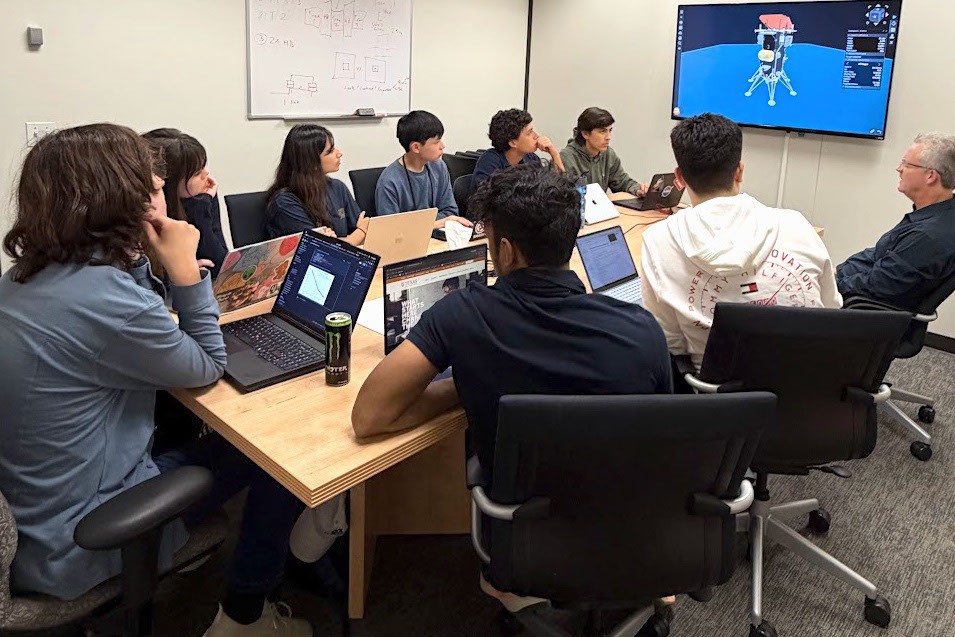
The SEES MATRIX team, composed of high school students, developed an interactive dashboard for the Intuitive Machines IM-3 lunar mission. The project focused on measuring propellant mass in microgravity using Modal Propellant Gauging (MPG), a technology developed by Dr. Kevin Crosby and NASA experts.
The students utilized publicly available flight data from the IM-1 and IM-2 missions to create a trajectory reconstruction algorithm. They performed computational fluid dynamics and Monte Carlo simulations to analyze fuel slosh dynamics and predict reliable MPG reading windows during critical mission phases.
The analysis identified that MPG can provide accurate data during Lunar Orbit Insertion and Powered Descent burns. The team also mapped potential landing sites in the Reiner Gamma region for the IM-3 mission, which is scheduled to land on the Moon in 2027.
The interns presented their findings to the Intuitive Machines propulsion engineering group. The research was also shared at the SEES Annual Symposium, the Wisconsin Space Grant Consortium Annual Conference, and is scheduled for the American Geophysical Union Annual Meeting in December 2026.