

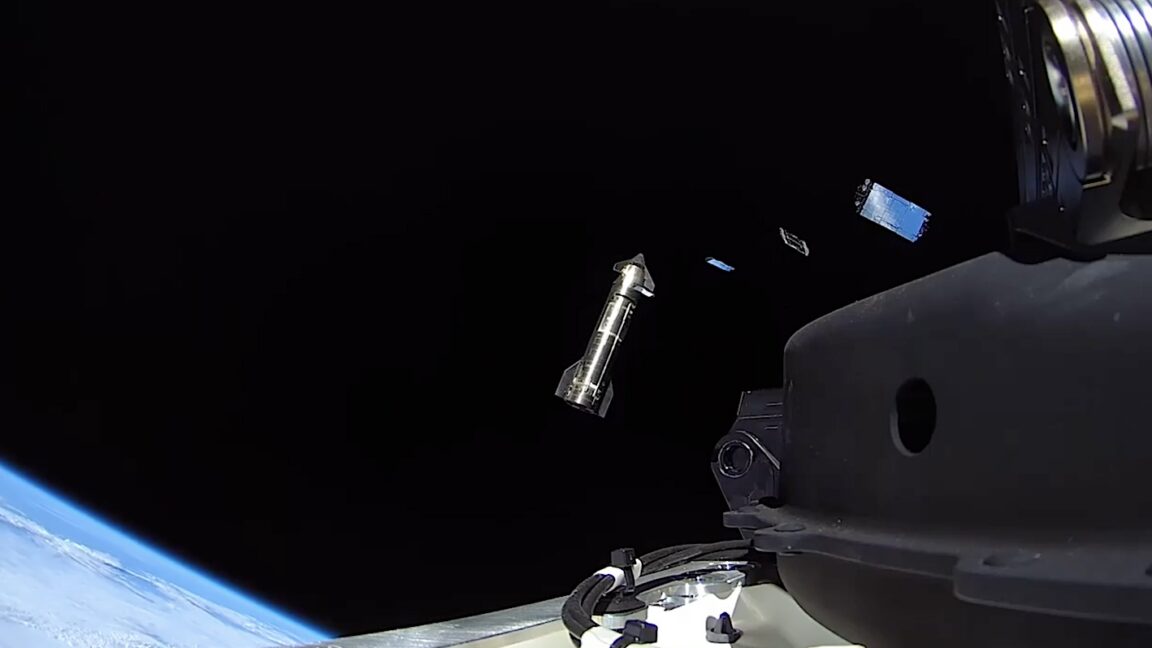
SpaceX vice president Michael Nicolls stated that the Starlink constellation currently includes over 11,000 satellites, representing two-thirds of all active spacecraft in low-Earth orbit. The company plans to launch a new network called Starmind, which could eventually reach up to one million satellites for AI computing capacity.
Nicolls emphasized the need for better data-sharing among satellite operators to prevent collisions. He noted that SpaceX satellites perform approximately 1,000 collision avoidance maneuvers daily. In recent months, Starlink satellites have maneuvered to avoid about 650 active satellites from other operators, with only half of those operators sharing their trajectory data.
The company has lowered the altitude of its active Starlink constellation to below 500 kilometers, with new V3 satellites operating at approximately 350 kilometers. SpaceX utilizes a system called Stargaze, which uses onboard cameras to track about 90 percent of maneuvering satellites that intersect with Starlink orbits.
Amazon, which currently has 396 satellites in orbit, supports data coordination. The company plans a first-generation network of 3,232 satellites and has received FCC approval for a 4,504-satellite second-generation network, with an additional 5,105 satellites proposed for direct-to-device connectivity.



