

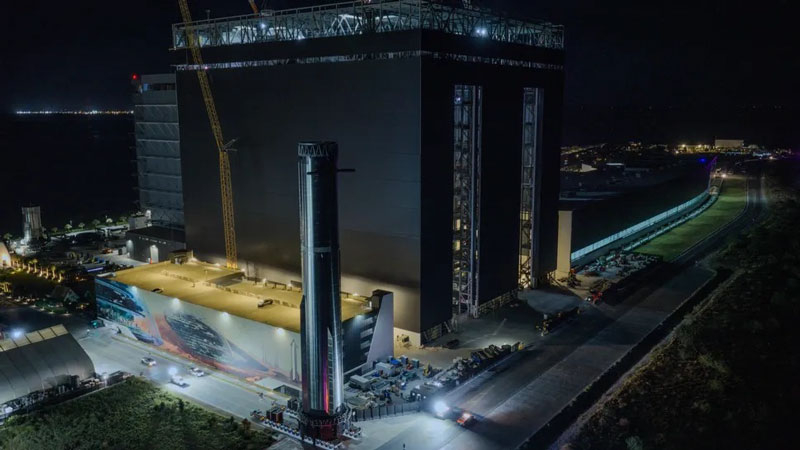
SpaceX has moved the 14th test flight of the Starship system to September 28. The Super Heavy booster is already positioned at the Starbase launch site in South Texas to begin final preparations.
During this mission, the upper stage will reach low Earth orbit for the first time to deploy 26 next-generation Starlink V3 satellites. These satellites are larger and heavier than previous versions.
The flight plan includes approximately six orbits around the Earth, lasting about ten hours. Following the mission, the ship will re-enter the atmosphere and splash down in the Pacific Ocean near the coast of Chile.
The Super Heavy booster is scheduled to perform a controlled descent into the Gulf of Mexico seven minutes after launch. SpaceX has decided to postpone the use of the Mechazilla capture system for this specific test flight due to safety risks.


