

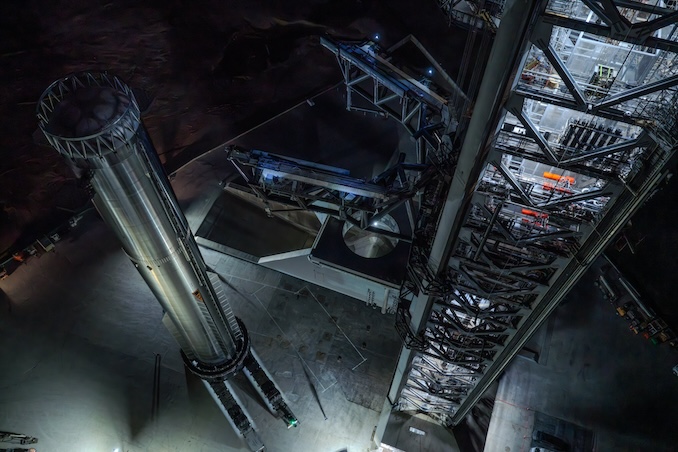
SpaceX has positioned the Super Heavy booster B21 on the launch pad at Starbase, Texas, in preparation for the inaugural orbital flight of the Starship system. The booster, which measures 72 meters in height and 9 meters in diameter, was moved to Pad 2 on Monday. The company is currently targeting a launch date of September 28 at 7:15 a.m. CDT, pending final regulatory approval.
The Federal Aviation Administration must grant a license modification for the orbital flight plan. This process requires SpaceX to satisfy safety, policy, and financial responsibility criteria. The FAA is evaluating the risks associated with the reentry of the 52-meter-tall upper stage, S41, which has not yet been rolled out to the launch site.
The upcoming mission, designated as Starlink 31-1, aims to deploy 26 Starlink V3 satellites into a 275-kilometer orbit. According to SpaceX, each V3 unit provides 1 Tbps of capacity, representing a tenfold increase compared to V2 mini satellites launched on Falcon 9. The satellites are expected to begin serving customers within weeks of deployment following on-orbit checkouts.
SpaceX recently conducted a 60-second static fire test of the six Raptor engines on the upper stage. While the company prepares for the Starship mission, it continues its regular launch schedule, including recent pre-flight tests for Falcon 9 missions at Kennedy Space Center and simulations for Crew Dragon emergency procedures.



