

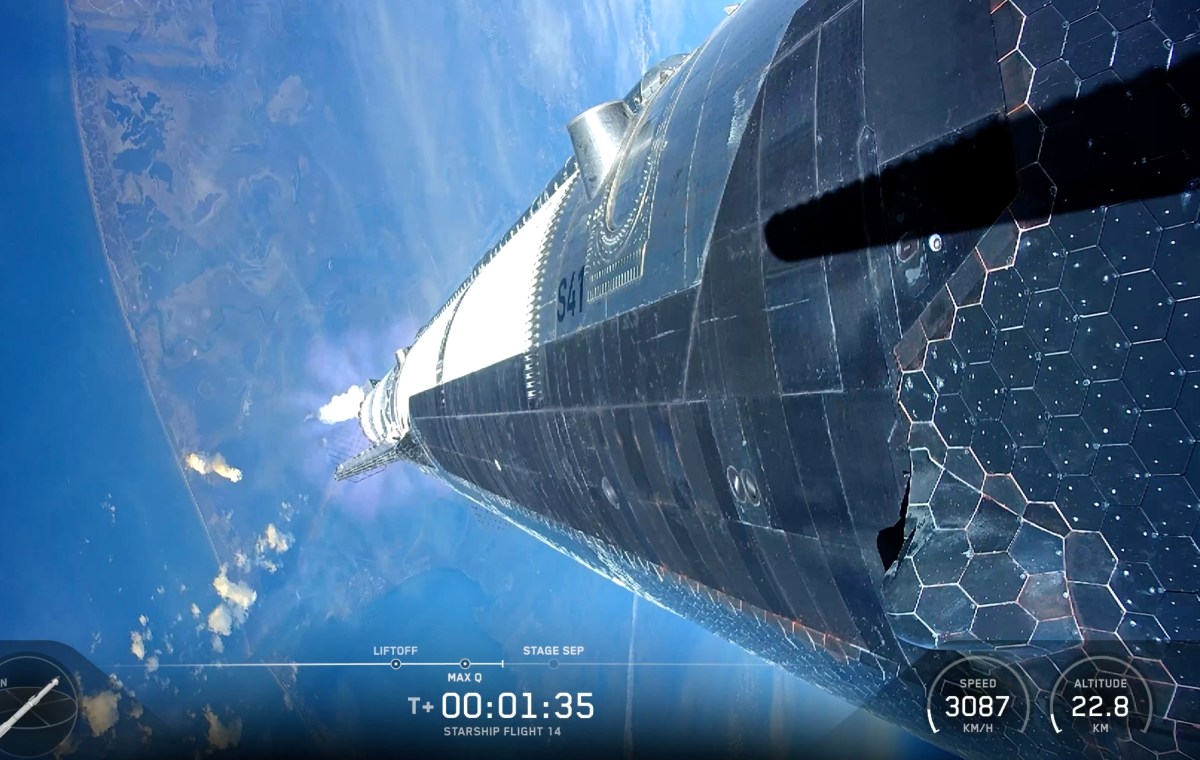
SpaceX successfully launched its Starship mega-rocket from South Texas on Monday, achieving Earth orbit for the first time. During the flight, the upper stage experienced a technical issue when it lost one of its six Raptor engines. Despite this, the company proceeded with the mission after a brief pause.
The flight plan included orbiting the Earth six times over a nine-hour period to deploy 26 third-generation Starlink satellites. This milestone is essential for the company's long-term objectives, which include NASA moon missions and the deployment of AI data center satellites.
The Super Heavy booster stage successfully separated from the upper stage and performed a simulated landing over the Gulf of Mexico. This maneuver represents the most successful test of the V3 version of the rocket to date, following the start of testing for this iteration in May 2026.


