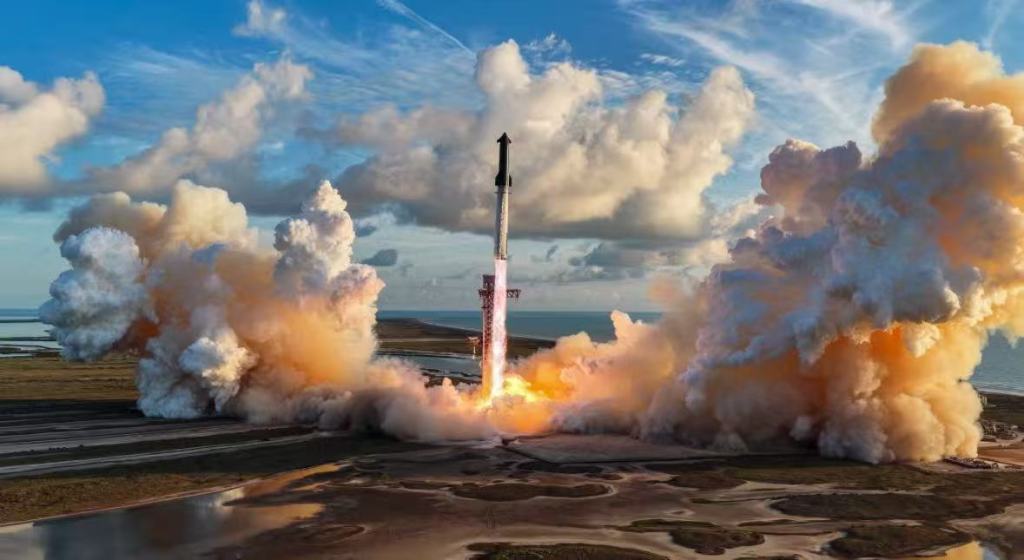
SpaceX successfully completed its 14th Starship mission on September 28, marking the vehicle's first orbital flight. The mission launched from the Starbase facility on the Gulf Coast and reached an altitude of approximately 269 kilometers to deploy 26 Starlink V3 satellites. Elon Musk confirmed that all deployed satellites are operational.
The mission served as both a technical test and a commercial operation, as the V3 satellites offer ten times the data processing capacity of the previous V2 generation. Musk stated that SpaceX aims to launch 60 V3 satellites per mission once Starship reaches regular operational status, supporting the company's large-scale infrastructure goals.
The flight encountered a technical issue when one of the three main engines shut down prematurely after stage separation. This caused the mission to conclude after three hours, seven hours earlier than the planned ten-hour duration. The Super Heavy booster performed a controlled splashdown in the Gulf of Mexico, though it was not intended for recovery.
Musk noted that achieving hourly flight frequency remains two to three years away. While Starship is designed for full reusability, previous missions since 2023 were limited to suborbital flights. The company continues to address engine reliability challenges, which are critical for future NASA lunar missions and the goal of conducting hundreds or thousands of flights annually.