

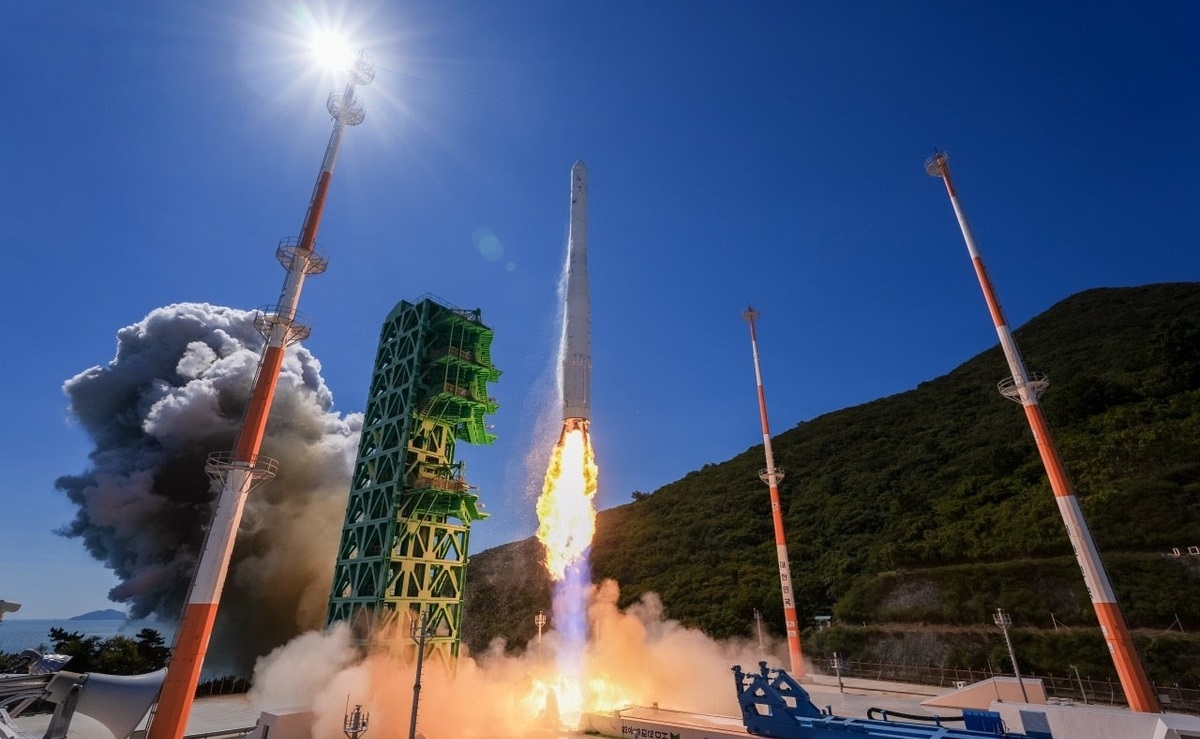
The launch of the South Korean Nuri rocket, which took place on the morning of October 7, was declared successful by the Korea Aerospace Administration (KASA). Director Oh Tae-seok confirmed that the separation of the first and second stages, as well as the fairing, proceeded according to the flight plan, with the third stage performing as expected.
The rocket carried a total of 15 satellites, including 10 CubeSats and 5 Neonsat units weighing less than 100 kg each. While 14 satellites were successfully deployed, the Persat-02 CubeSat, developed by Quaternion, failed to separate from the launch vehicle.
The primary mission objective was the deployment of the five Neonsat units, which are designed for Earth remote sensing to monitor the Korean Peninsula for disaster response and national security. KASA confirmed that this goal was achieved.
One of the deployed satellites has already established communication with a ground station, with the remaining units expected to connect according to the established schedule. This mission marks the fifth flight for the Nuri rocket program since its inception in 2021.


