

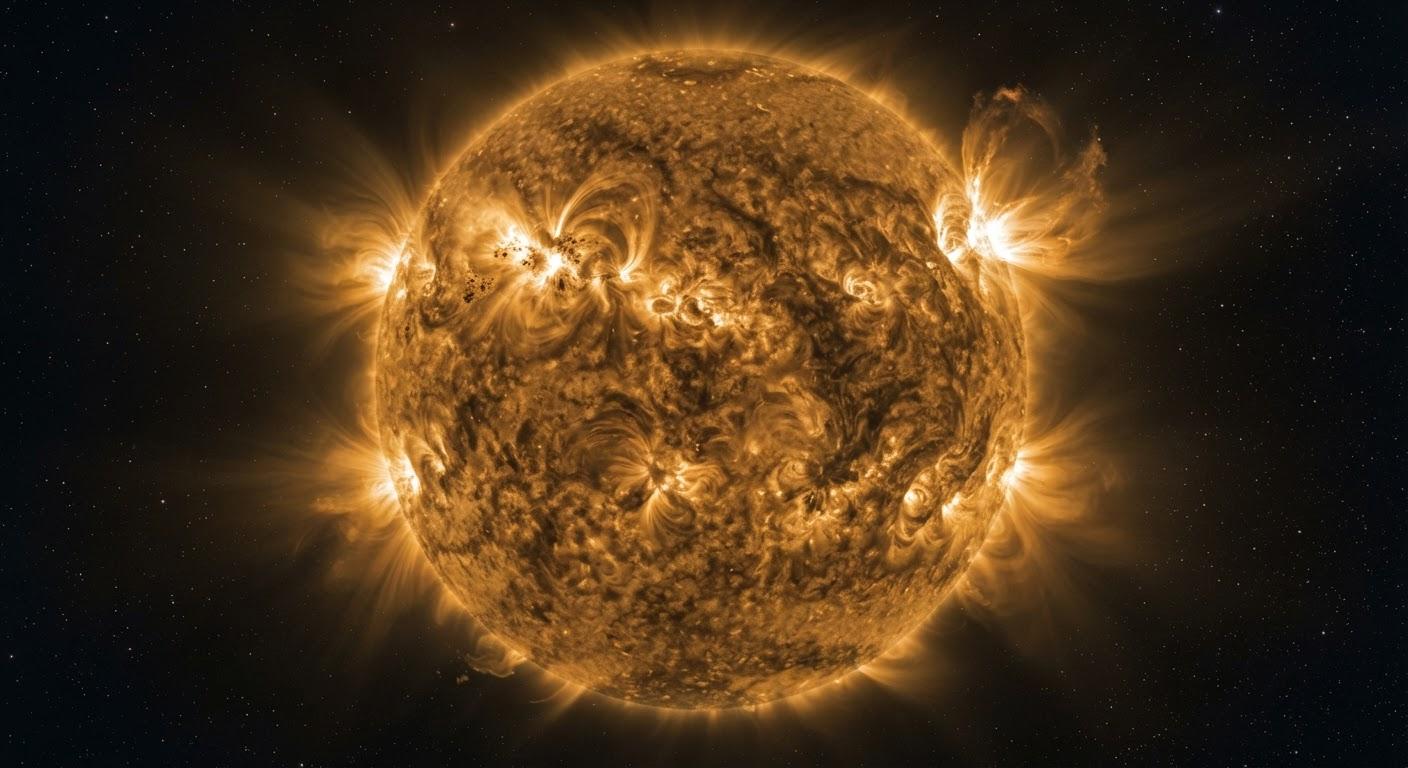
The Solar Orbiter probe has provided new data on the origin of magnetic switchbacks in the solar wind. Measurements taken by the SWA instrument during a recent flyby revealed that these structures likely result from a combination of two distinct physical processes: magnetic reconnection and turbulence.
Previously, scientists debated whether these magnetic bends were caused solely by magnetic reconnection or by large-scale turbulence. The probe's direct analysis of plasma composition, including specific oxygen and carbon components, confirms that both mechanisms play a role in the formation and evolution of these structures.
The findings suggest that switchbacks initially form through magnetic reconnection between open and closed solar magnetic field regions, which ejects plasma into the solar wind. Subsequently, magnetic fluctuations and turbulence further modify and intensify these structures as they propagate.
Launched in 2020 as a joint mission between ESA and NASA, the Solar Orbiter is designed to operate in extreme conditions. The spacecraft can approach the Sun as close as 42 million kilometers, allowing it to perform unique measurements of the solar magnetic field and plasma environment.



