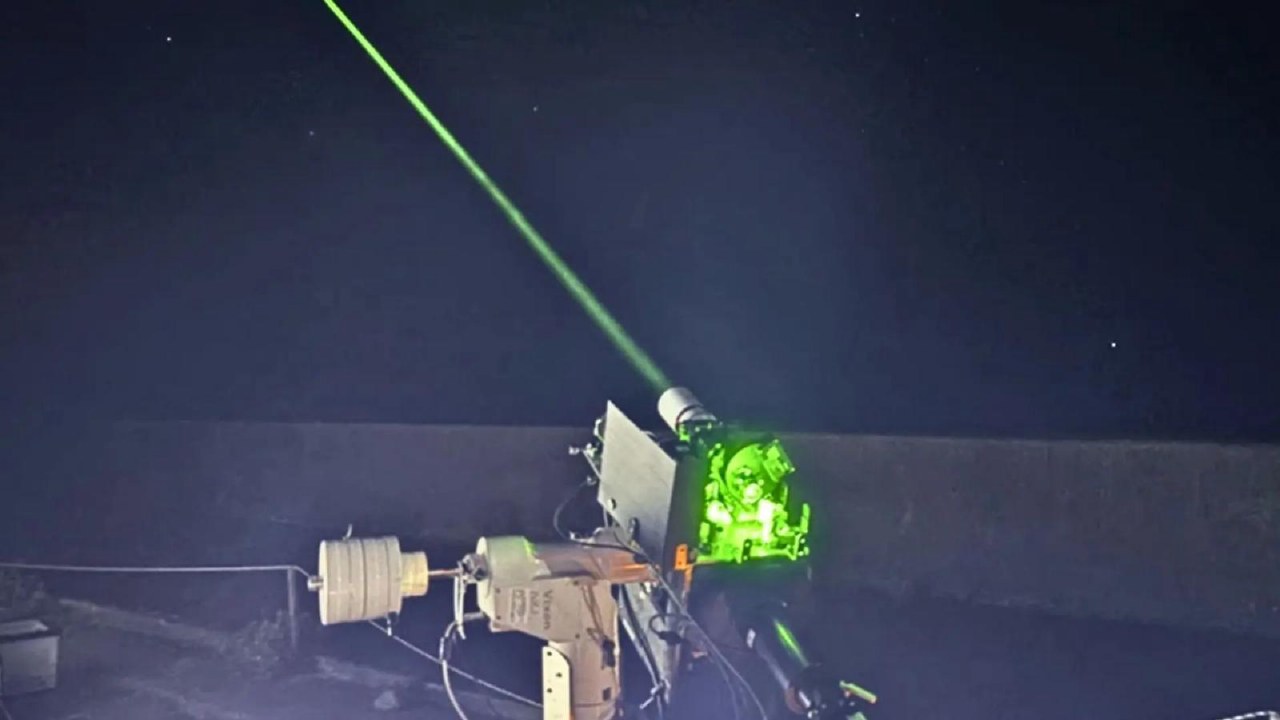
SoftBank, Hitotsubashi University, and the National Institute of Polar Research tested a laser tracking system for a HAPS platform at an altitude of 20 km. The experiment, conducted on August 23–24, 2026, near Cape Muroto, Japan, utilized a passive corner cube reflector mounted on a Sceye platform to verify pointing, acquisition, and tracking technologies.
The ground-based portable laser unit successfully maintained a lock on the moving stratospheric platform by sending pulses and receiving reflections. This test allowed researchers to measure atmospheric signal attenuation, which is critical for determining future power requirements and receiver sensitivity for optical communication links.
The system included an automatic safety feature that disabled the laser if a manned aircraft was detected in the beam's path. SoftBank noted that the precision requirements for this laser tracking are significantly higher than those for standard optical data transmission.
The next phase of the project involves replacing the passive reflector with an active transceiver to enable two-way data exchange. SoftBank aims to build a three-dimensional network connecting ground infrastructure, stratospheric platforms, and low-earth orbit satellites, with potential commercial services starting in 2027.