

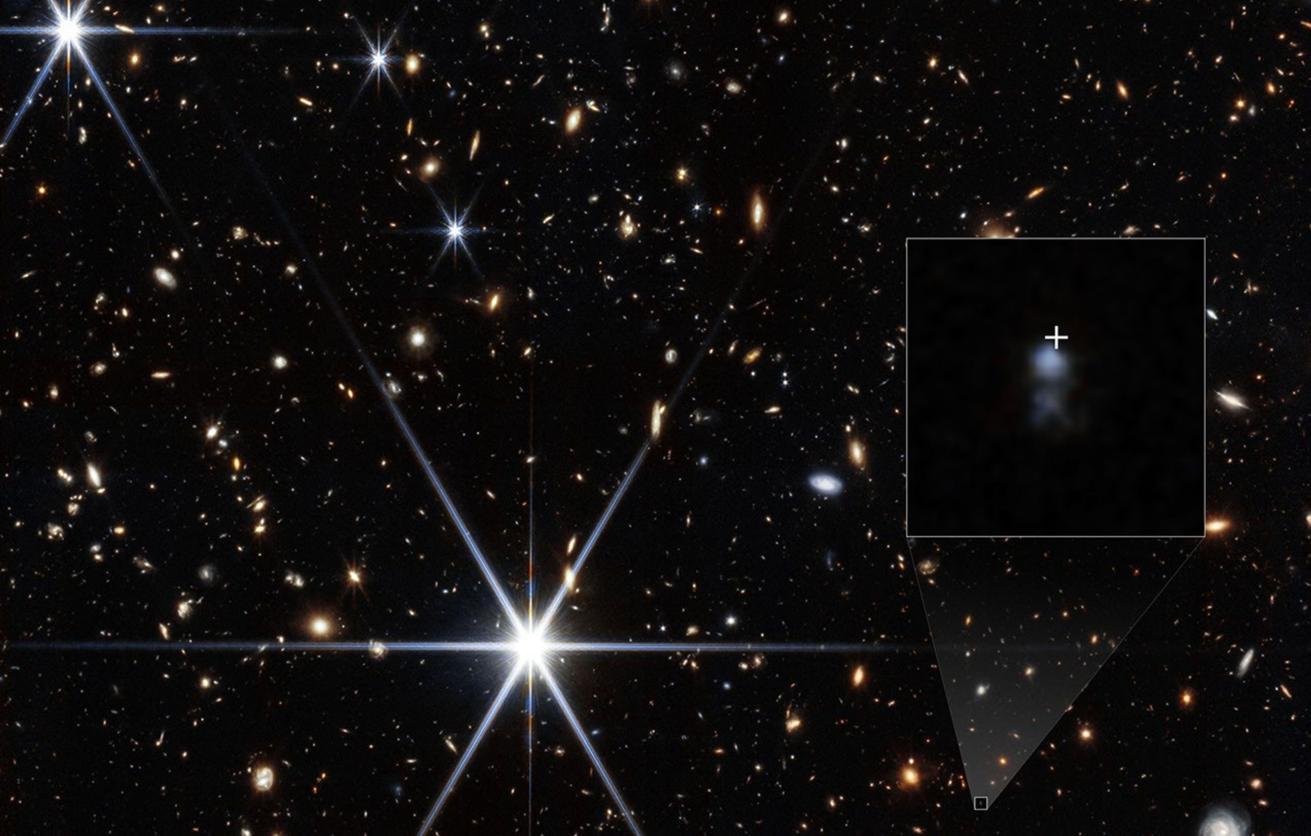
Astronomers have identified the most distant fast radio burst (FRB) ever recorded, designated FRB 20240304B. The signal originated over 10 billion years ago, dating back to a time when the universe was approximately 3 billion years old. This discovery marks a distance more than double that of the previous record holder.
The MeerKAT radio telescope in South Africa first detected the burst. Following the initial detection, researchers utilized NASA's James Webb Space Telescope to pinpoint the specific galaxy from which the signal emanated. Fast radio bursts are brief pulses of radio emission that typically last for only a few milliseconds.
Since the first discovery of an FRB in 2007, scientists have registered over 10,000 such events. While some sources emit repeating signals, others appear as single, isolated occurrences. Magnetars, which are neutron stars with intense magnetic fields, are considered a potential source, though the exact origins of many bursts remain unknown.
Beyond the signals themselves, researchers analyze how these radio waves interact with matter while traveling through intergalactic space. This interaction provides data on intergalactic gas and the evolution of the universe. The detection of FRB 20240304B offers a new opportunity to study cosmic processes from the early history of the universe.



