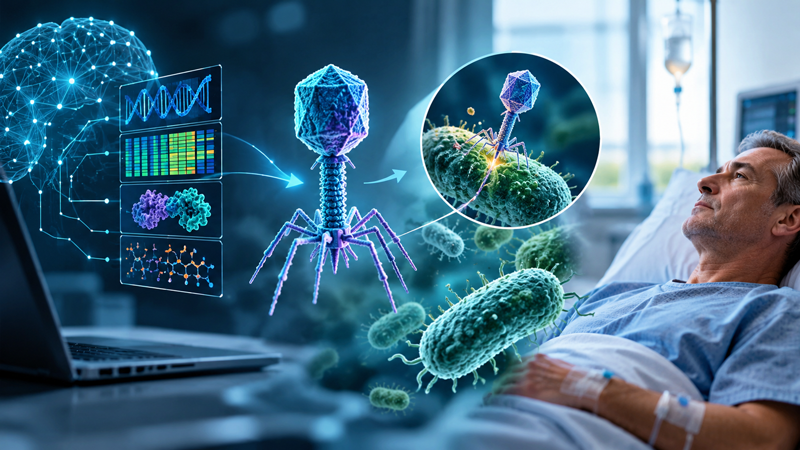
Radical Numerics has conducted the first known human trial involving viruses designed by artificial intelligence. The procedure was performed under an expanded access program for patients with no other treatment options, targeting antibiotic-resistant bacteria.
The company utilized the Omnii-1 model, a multimodal genomic language model, to modify the T7 bacteriophage. The AI focused on the gp17 gene, which dictates how the virus recognizes and binds to specific bacterial strains like Escherichia coli.
In laboratory tests, the AI model demonstrated a 69.9 percent success rate in generating viable phages, compared to 4.8 percent for random modifications. Out of 6694 tested variants, 2161 outperformed the original phage.
Before the human trial, the lab-grown phage mixture successfully eliminated the patient's specific antibiotic-resistant bacterial isolate in a petri dish. However, the company has not disclosed the patient's condition or the clinical outcome of the procedure.
Radical Numerics maintains that these results are preliminary and do not confirm the safety or efficacy of the method. The experimental treatment has not received approval for broad clinical use.