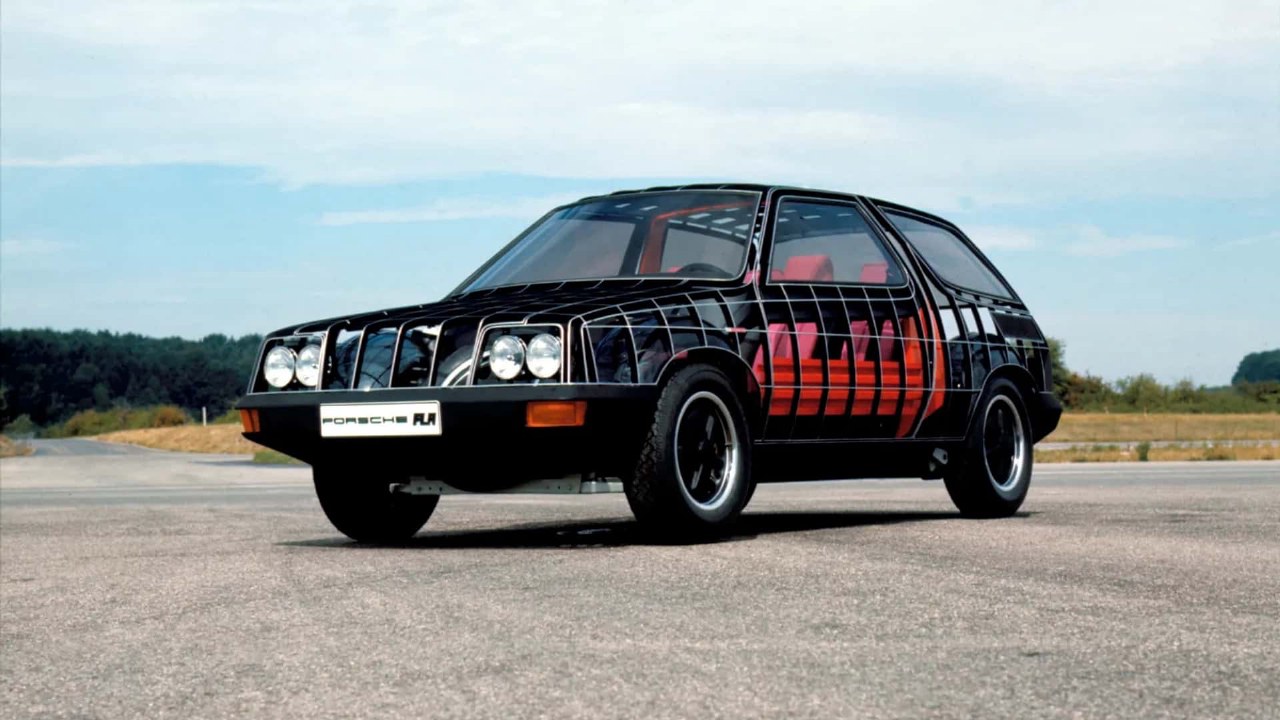
In 1973, Porsche unveiled the Forschungsprojekt Langzeitauto (FLA), a research concept designed to address concerns about finite resources and industrial expansion. Commissioned by the German Federal Ministry for Research and Technology, the project aimed to create a vehicle with a 20-year lifespan, capable of covering at least 300 000 kilometers.
The FLA featured a 2.5-liter air-cooled four-cylinder boxer engine producing 74 horsepower and a three-speed automatic transmission. Engineers prioritized durability over performance, using materials like aluminum and stainless steel, scratch-resistant glass, and silver-coated electrical contacts to reduce wear and simplify maintenance.
Although the FLA never entered production, it influenced future manufacturing processes. Starting in 1975, Porsche introduced hot-dip galvanization for the 911 body panels to prevent corrosion. The company also implemented a six-year warranty against corrosion perforation as a result of these research efforts.
Porsche estimated that a production version of the FLA would have cost approximately 30 percent more than a standard vehicle of that era. The project remains a notable example of the company's early exploration into vehicle longevity, repairability, and resource conservation.