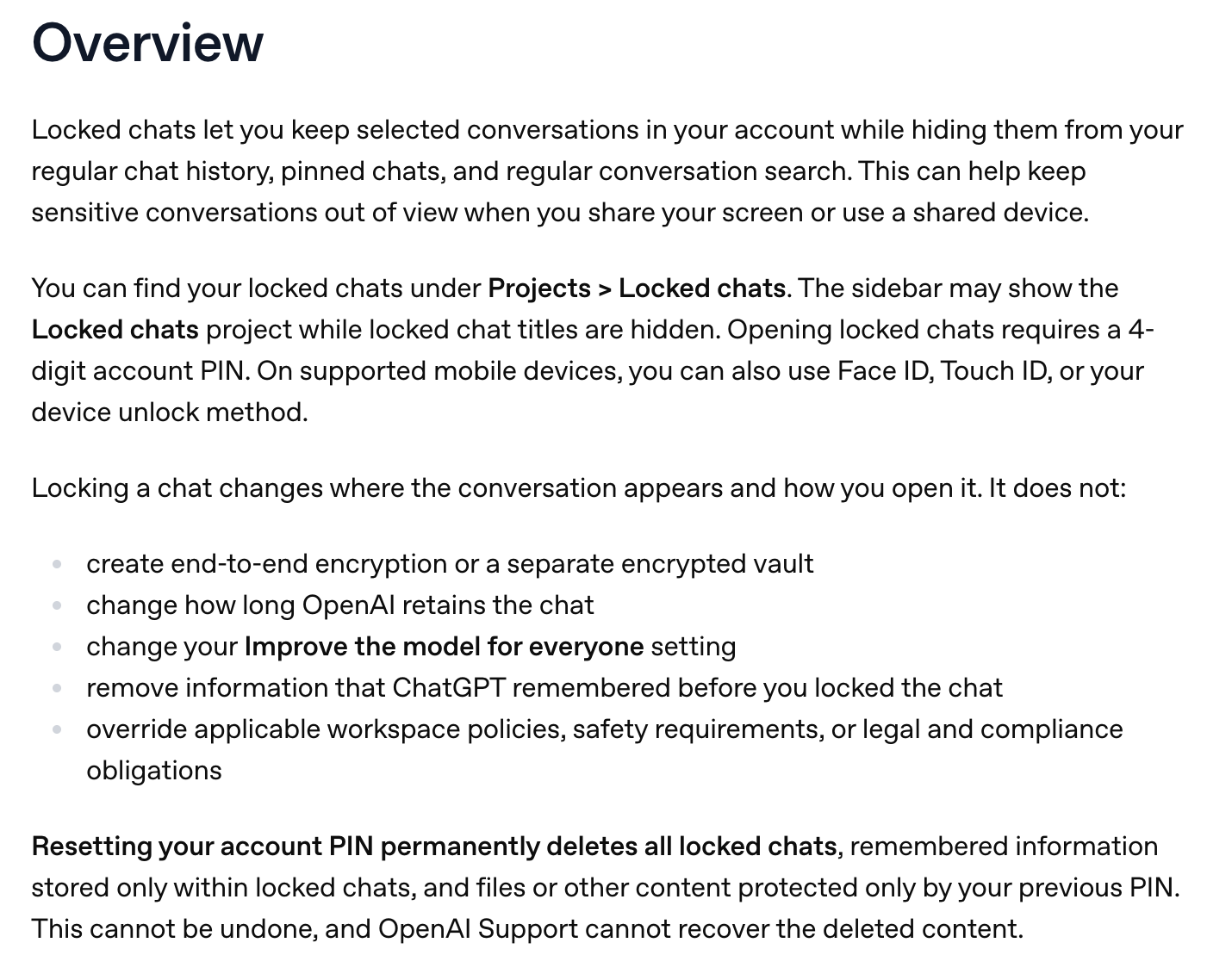
OpenAI has introduced a new security feature for ChatGPT that allows users to lock specific conversations. Access to these locked chats can be restricted using a four-digit PIN code or biometric authentication, such as Face ID or Touch ID, on supported devices.
Locked conversations are moved to a separate section within the app, isolating them from standard chat history, pinned chats, and search results. This feature is designed for users who need to protect sensitive information while sharing their device with others.
The new security layer does not implement end-to-end encryption or change data retention policies. If the memory function is enabled, locked chats maintain an independent memory space that is not shared with general conversations, ensuring that new information remains isolated.
Users should note that resetting the PIN will permanently delete all content previously protected by the old code. Additionally, the feature is not compatible with temporary, archived, group, shared, or scheduled chats, nor with those containing meeting recordings.
The update is rolling out in batches starting from Tuesday. It is available to users across all tiers, including Free, Go, Plus, Pro, Business, Enterprise, and Education versions, with the exception of the specialized healthcare version of ChatGPT.