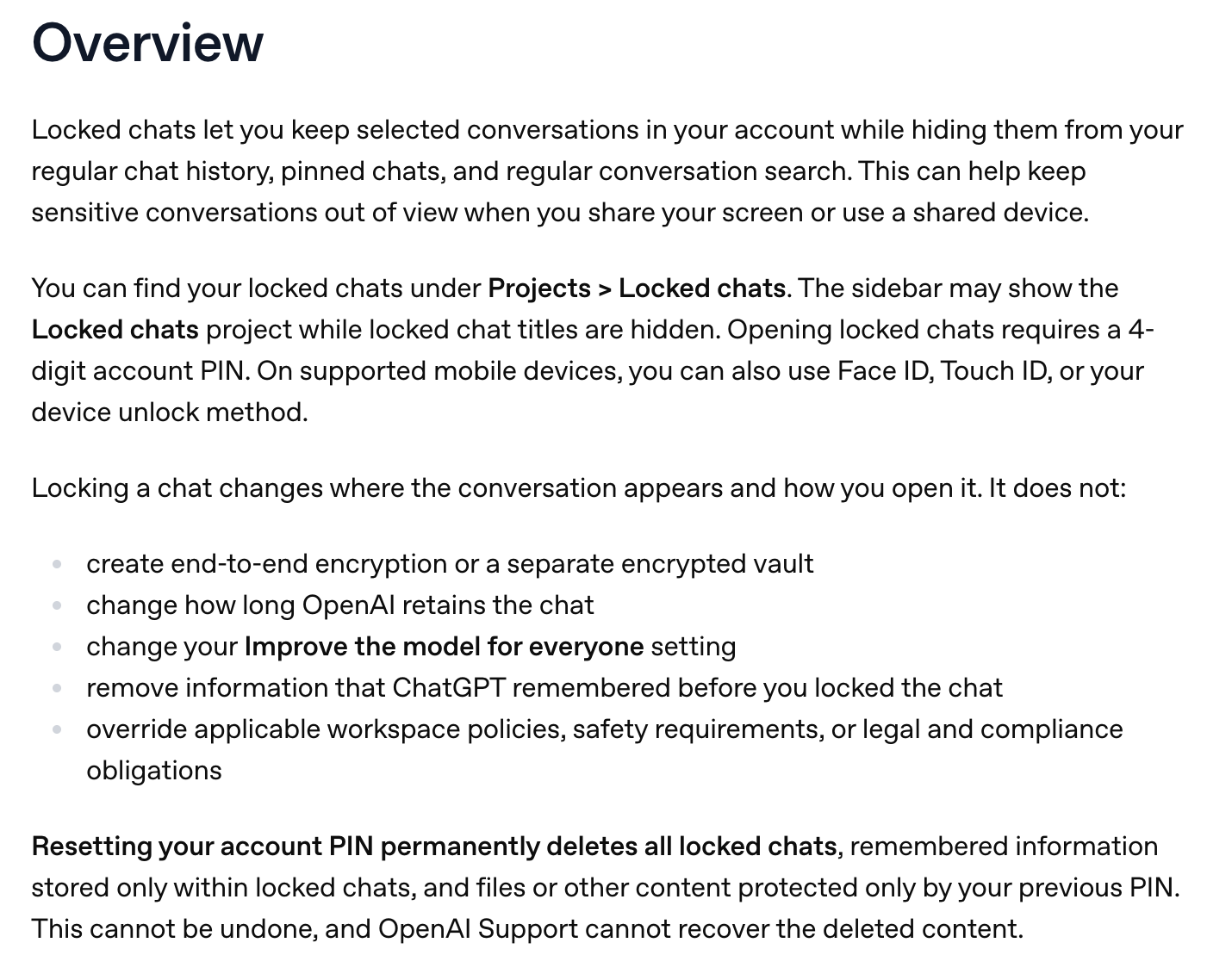
OpenAI has introduced a new 'Locked Chats' feature for ChatGPT, allowing users to secure specific conversations. Once locked, these chats are moved from the main history and search results into a dedicated 'Projects - Locked Chats' section. Accessing these conversations requires a four-digit PIN or biometric verification, such as Face ID or Touch ID, on supported mobile devices.
The feature is rolling out to users across various subscription tiers, including Free, Go, Plus, Pro, Business, Enterprise, and Edu plans. However, it is currently unavailable for the Healthcare version. Locked chats remain stored within the user's account, and any files uploaded or generated within those sessions are covered by the same protection measures.
Locked chats utilize a separate memory space, meaning new information added to these sessions will not update the standard ChatGPT memory. Conversely, existing memories are not deleted upon locking. OpenAI clarifies that this feature is designed for privacy from casual observers rather than providing end-to-end encryption or a secure vault; data retention policies and model training settings remain unchanged.
Users can reset their PIN if forgotten, but this action results in the permanent deletion of all locked chats, associated memories, and protected files. If the current PIN is known, it can be updated without data loss. Certain chat types, such as temporary, archived, group, or shared link conversations, as well as those with scheduled tasks or recordings, cannot be locked at this time.