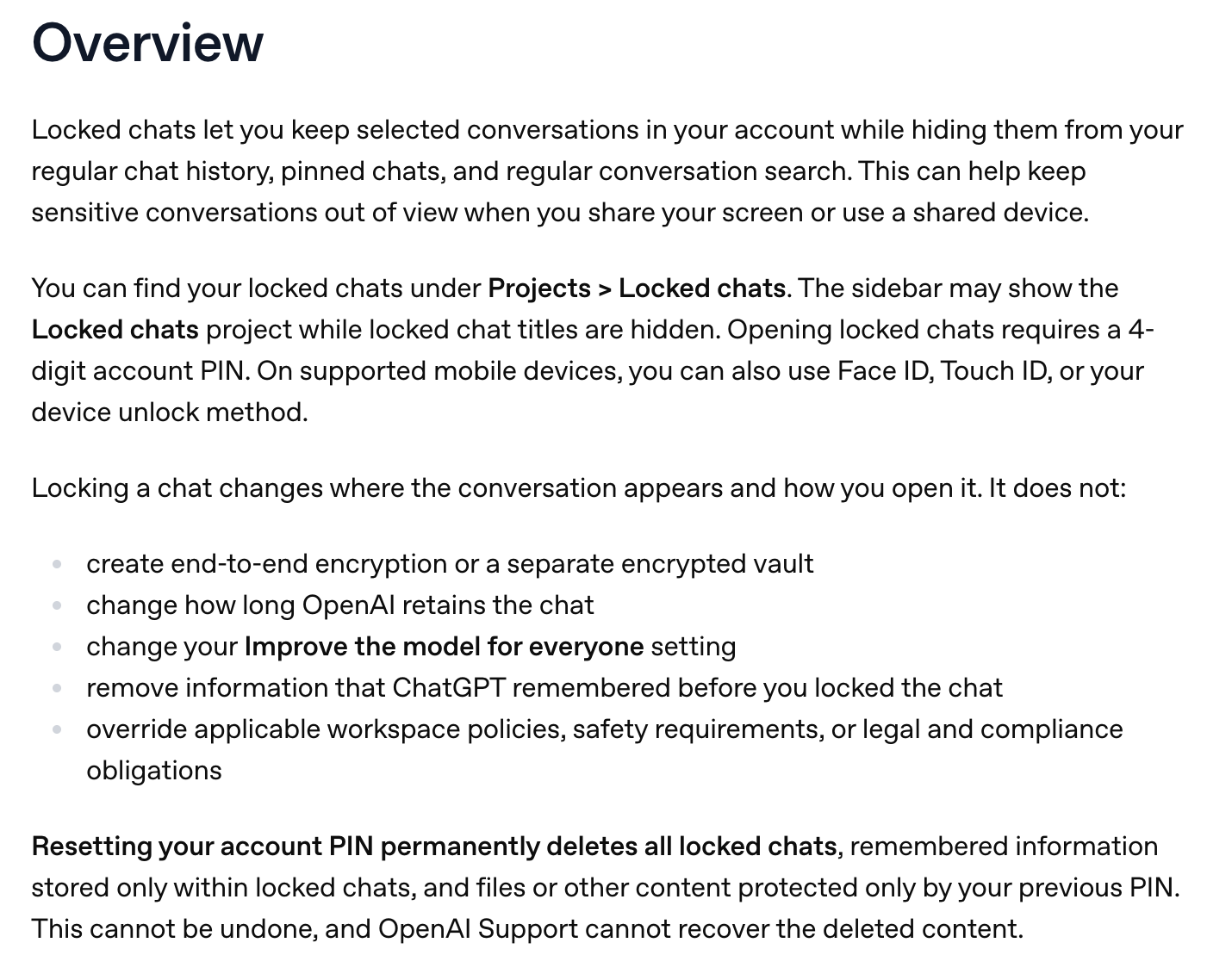
OpenAI introduced a new security feature for ChatGPT that allows users to lock specific conversations. To access these protected chats, users can set a four-digit PIN or utilize biometric authentication methods like Face ID or Touch ID on compatible devices.
Locked conversations are moved to a dedicated section separate from the standard chat history, pinned items, and search results. Unlike temporary sessions, these chats remain accessible for future use. If a user resets their PIN, all content within the locked section is permanently deleted.
The feature maintains a separate memory space for locked chats, preventing information from leaking into regular conversations. However, OpenAI clarifies that locking does not provide end-to-end encryption, nor does it alter data retention policies or the model training settings.
The tool is available across most subscription tiers, including Free, Go, Plus, Pro, Business, Enterprise, and Edu plans. It is currently excluded from ChatGPT for Healthcare. The rollout began on Tuesday, though availability may vary by user.