

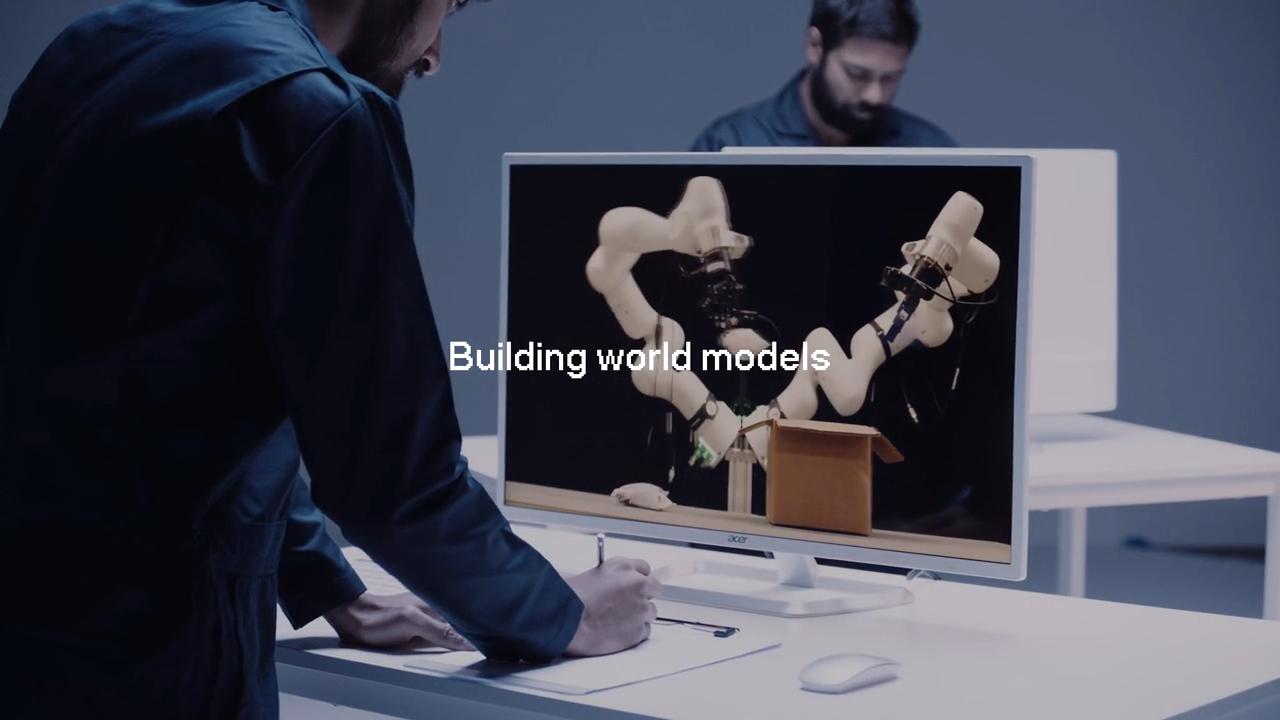
The startup Odyssey, founded by former autonomous vehicle industry professionals, has released its third-generation world models: Odyssey-3 and Odyssey-3 Pro. These systems generate interactive 3D environments from text prompts, calculating object movement and physical interactions in real time. The base version operates at a resolution of 832x480 pixels, while the Pro version supports 1280x720.
The underlying architecture is an autoregressive diffusion transformer trained on diverse datasets, including annotated internet videos, keyboard and mouse input logs, and rigid body physics simulations. The model generates video frame-by-frame, responding to user commands and camera movements from first- or third-person perspectives. Each fragment requires only a few generation steps to maintain real-time performance.
Odyssey markets the technology primarily as a simulator for training robotics and physical systems. The company reports that a robotic arm trained on several dozen hours of demonstrations successfully performed grasping tasks with error recovery. Additionally, a humanoid policy maintained functionality under varying lighting conditions, and the model was adapted for driving in India using 20 hours of data.
In performance testing, Odyssey-3 Pro achieved 66.1 points on the Physics-IQ Verified benchmark, marking the highest published result. On the WorldMark benchmark, the model secured first place in three out of four categories, though it trailed behind Lyra 2.0 and AlayaWorld in first-person scene realism. Research previews are currently available, with API access provided via a developer portal.



