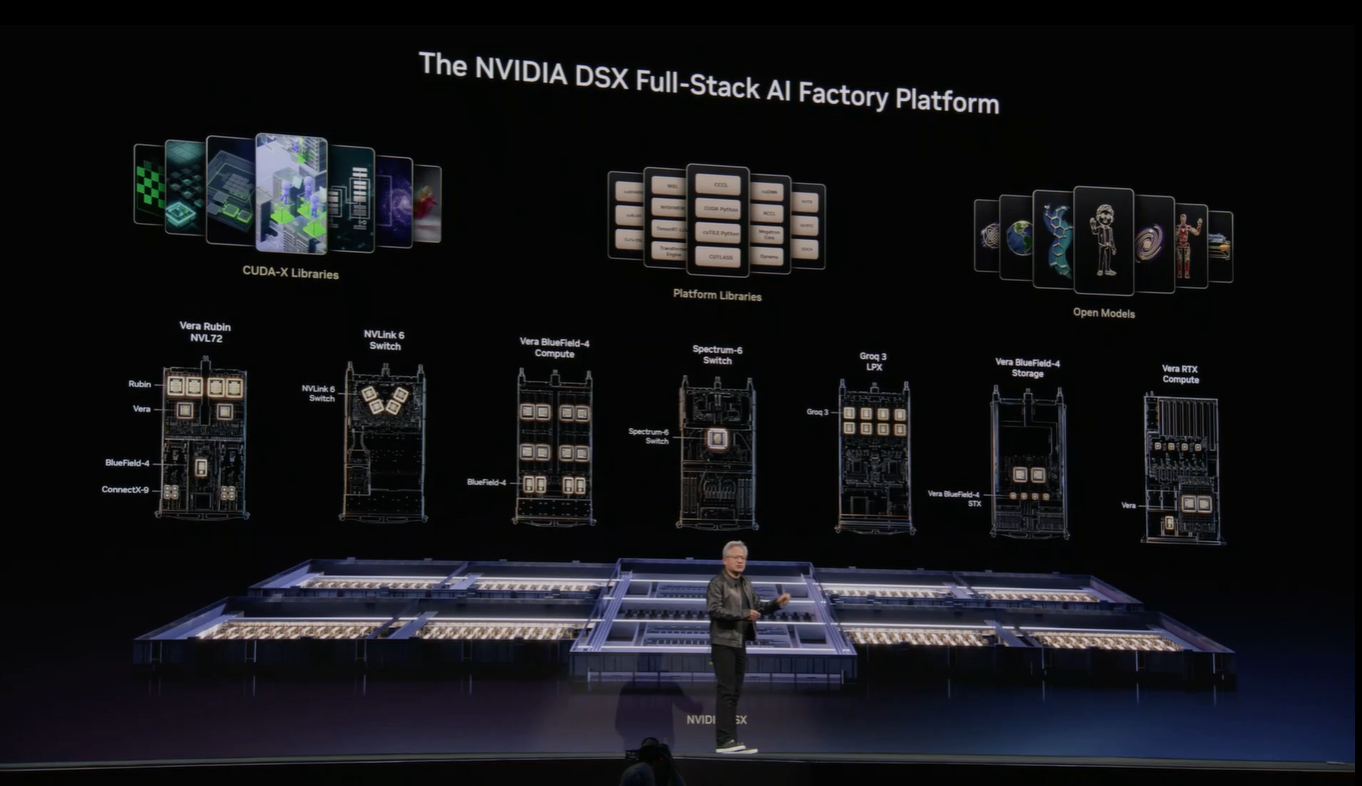
Nvidia CEO Jensen Huang proposes a three-computer architecture for physical AI, consisting of separate machines for model training, simulation, and real-time robot operation. The company offers hardware and software solutions for each stage, including DGX and Grace systems for training, the Omniverse platform for digital twins, and Jetson Thor for edge computing.
To address data scarcity in physical environments, Nvidia provides tools like the Isaac GR00T foundation model and Cosmos for synthetic data generation. The company also developed the Newton physics engine in collaboration with Google DeepMind and Disney. All components operate on the CUDA programming platform.
Nvidia reported $10 billion in revenue from physical AI during the first half of 2026. Huang anticipates a global labor shortage of 30–50 million workers by 2030 in sectors such as manufacturing, logistics, and healthcare, positioning the company's full-stack approach as a solution for robot deployment.
The three-computer model serves as a revenue strategy, requiring customers to purchase hardware and software at every stage of the robot lifecycle. By integrating developers into the CUDA ecosystem from the training phase, Nvidia aims to maintain its market position across simulation and runtime deployment.