The demand for electricity to power artificial intelligence and data centers has triggered a global nuclear energy revival. According to the World Nuclear Association, 79 nuclear reactors are currently under construction worldwide as of October 16, 2026, the highest number since 1986.
China leads the current construction efforts with 38 reactors, followed by India with eight and Russia with seven. Beyond those currently being built, 122 reactors are in the planning phase, and over 300 are considered as prospective projects. The total capacity of units under construction is approximately 78.9 GW.
Small Modular Reactors (SMRs) are gaining interest, particularly in the U.S., due to shorter construction timelines of about five years compared to 10–15 years for large units. However, the industry has yet to establish unified safety and licensing standards for the roughly 70 SMR designs currently in development.
Projections indicate that over 600 reactors could be operational by 2040. European nations are reversing previous policies, with the EU promoting nuclear power for decarbonization and France considering 14 new reactors. Japan also plans to add 11–14 new reactors by the 2050s.
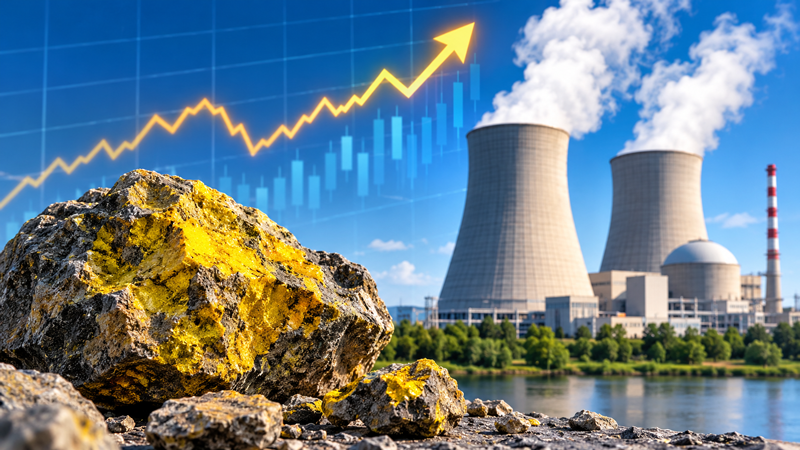
The surge in nuclear activity is impacting fuel markets. TradeTech reports that long-term uranium contract prices reached $214 per kg in late September 2026, surpassing previous peaks from 2007 and 2008. This trend is driving efforts to diversify fuel supply chains.