

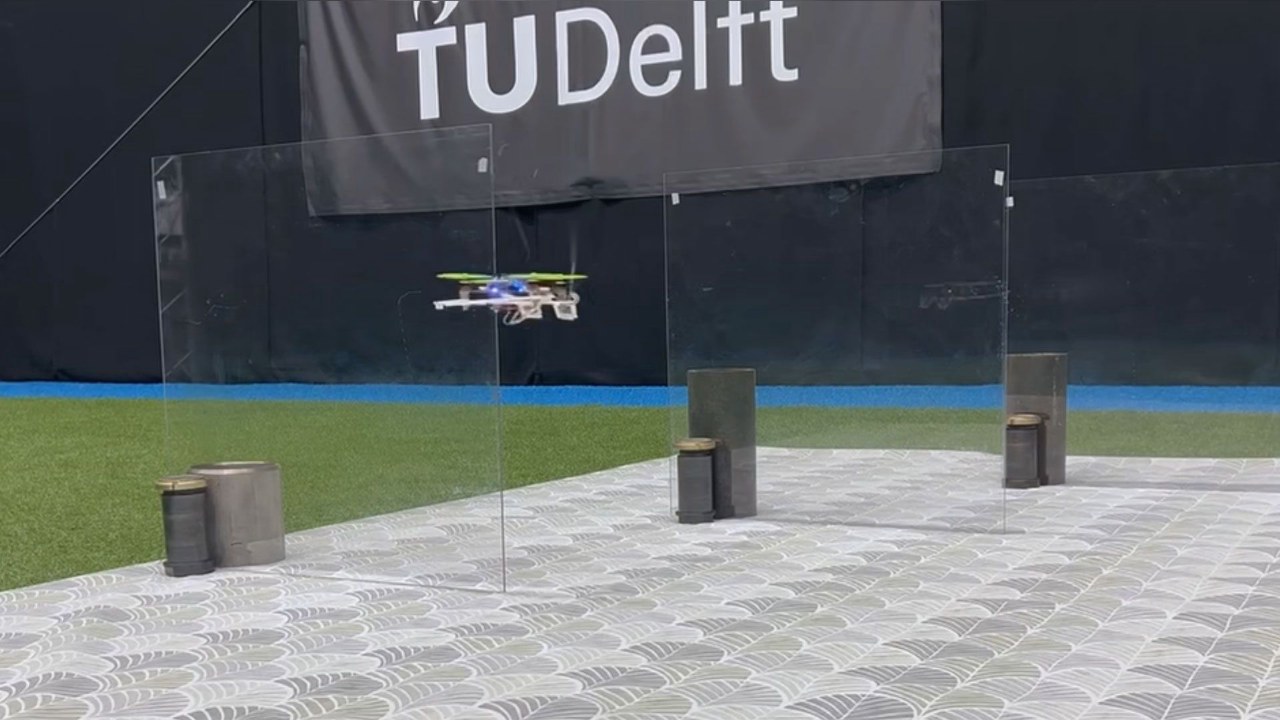
Researchers have developed a tactile navigation system for drones that uses physical whiskers to operate in environments where traditional sensors like cameras or GPS are ineffective. This technology allows drones to navigate through dark, dusty, or smoky conditions by physically sensing their surroundings.
The system features two whiskers attached to the front of the drone, each connected to three miniature pressure sensors. When a whisker touches a surface, the sensors calculate the drone's relative depth and position. This data enables the device to avoid obstacles, follow surfaces, and map unknown areas.
To ensure the system remains lightweight and efficient, the team created a real-time processing pipeline that filters out airflow interference. The software requires only 34 kilobytes of memory, allowing the entire perception process to run onboard without significant computational overhead.
The technology is designed for drones weighing less than 100 grams. Researchers suggest that these devices could be particularly useful for search-and-rescue missions, such as exploring collapsed structures, where they can operate safely without risking human or animal lives.


