

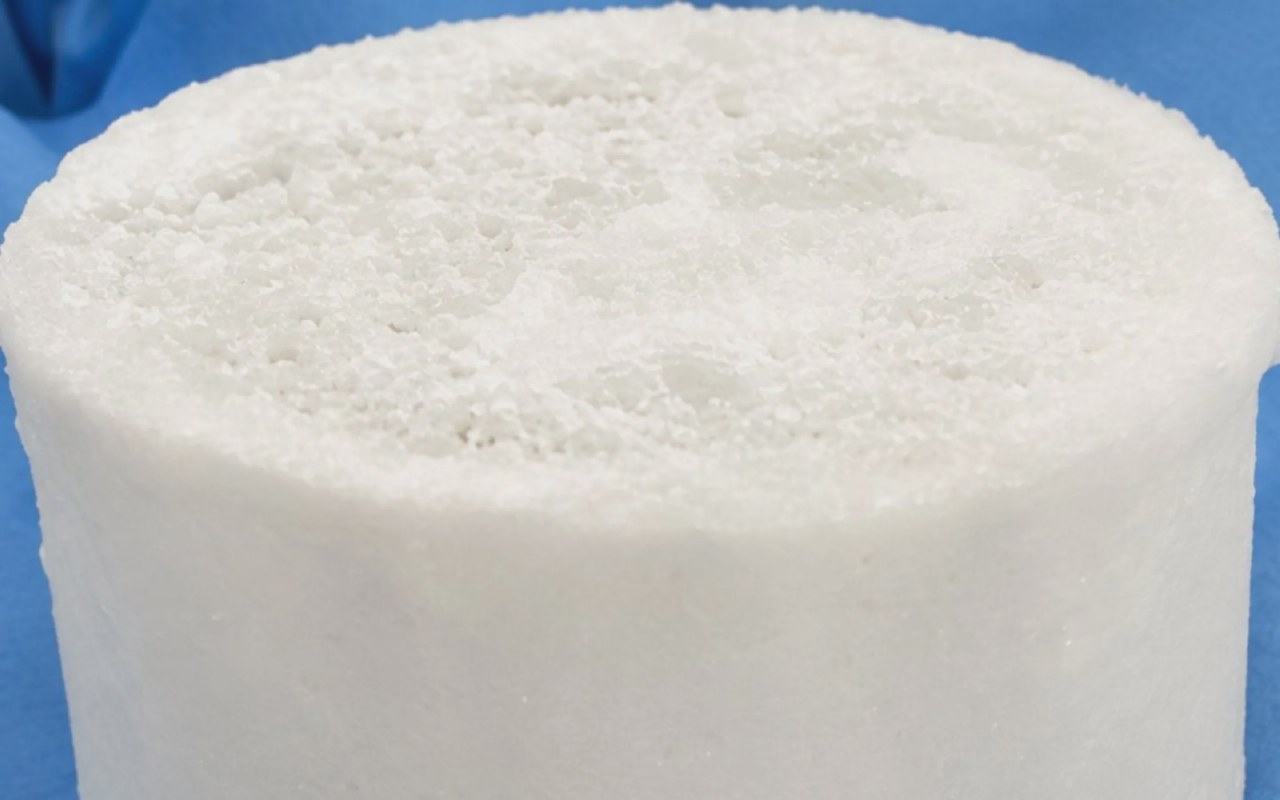
Researchers have developed a new composite material dubbed super ice, inspired by the World War II-era Pykrete concept. By integrating plant-based nanocellulose crystals and specialized protein molecules into water before freezing, the team created a dense, three-dimensional network that reinforces the ice structure at the molecular level.
Mechanical testing reveals that this material possesses a compressive strength approximately 10 times greater than that of ordinary ice. Furthermore, it demonstrates significantly improved toughness, capable of absorbing 70 times more mechanical impact energy before failure compared to standard ice, preventing the catastrophic shattering typical of frozen water.
The material is fully biodegradable and carbon-neutral, utilizing locally sourced resources. Potential applications include infrastructure for polar research stations, temporary construction in high-altitude permafrost regions, and cold chain logistics. Researchers also suggest its use for in-situ resource utilization on the Moon or Mars.


