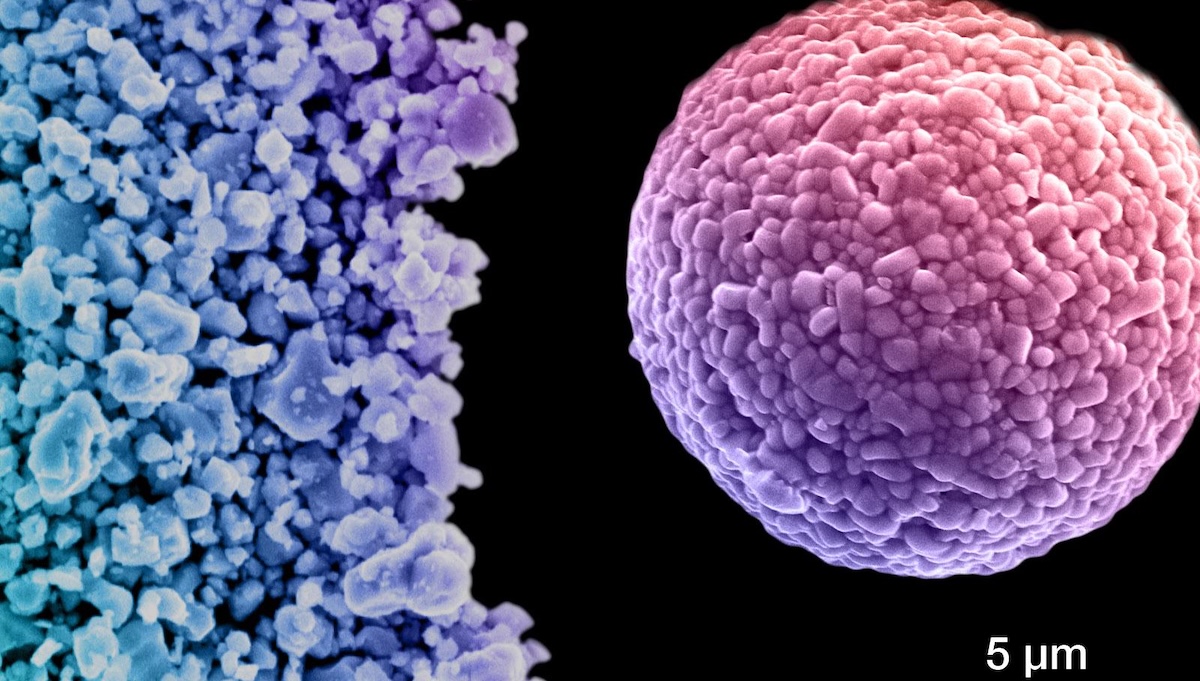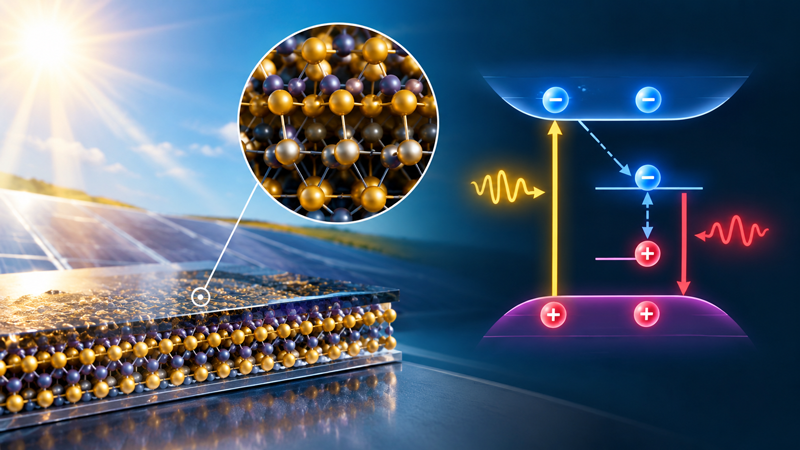
Researchers from the University of Oxford and their Chinese colleagues have identified a semiconductor that addresses the trade-off between light absorption and charge carrier recombination in solar panels. The study focused on bismuth sulfide (Bi2S3) as a potential solution to improve energy conversion efficiency.
The team produced 150 nm thick Bi2S3 films using thermal evaporation and annealing at 250 °C for 30 minutes in a nitrogen atmosphere. Analysis via ultrafast terahertz spectroscopy revealed that electron-hole recombination in this material slows down as temperatures decrease, which is contrary to the behavior of most common semiconductors.
The material's performance is attributed to a specific arrangement of energy levels, with an energy difference of approximately 40 meV between states. This configuration allows charges to persist longer, with calculations indicating that recombination rates in bismuth sulfide could be roughly 75 percent lower than in standard semiconductors.
While this finding does not immediately increase current solar panel efficiency, researchers suggest that the identified characteristics of bismuth sulfide provide a new framework for screening databases to discover other compounds capable of more efficient solar energy conversion.