

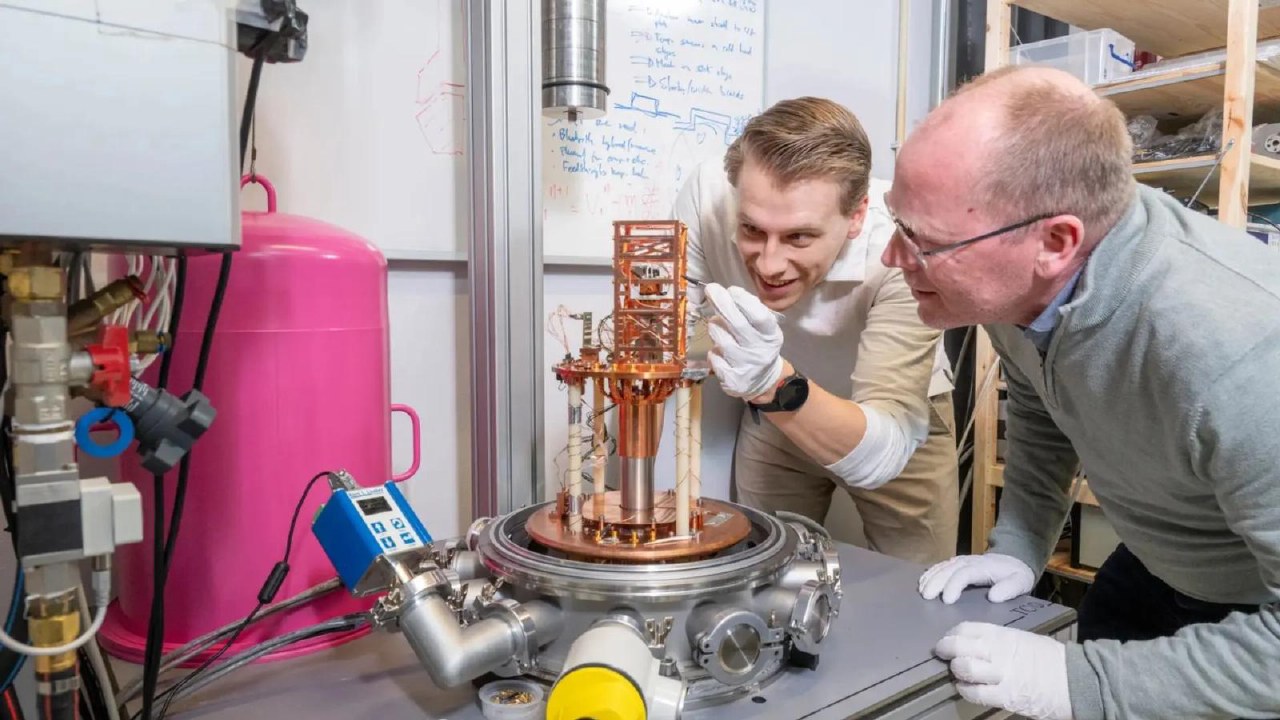
Researchers at the University of Twente have developed a new superconducting quantum sensor designed to analyze magnetic structures in quantum materials with nanometer precision. The device operates in external magnetic fields up to 1 Tesla, which is 20,000 times stronger than the Earth's magnetic field.
The sensor utilizes a superconducting quantum interference device (SQUID) mounted on a microscopic vertical silicon pyramid. This geometry allows the sensor to be positioned closer to the material surface than traditional flat chips, overcoming the rapid decay of local magnetic field strength over distance.
The device features four superconducting conductors: two for measuring magnetic fields and two for controlling the sensor's position and sensitivity during scanning. This design ensures stability in strong magnetic fields that would typically disrupt superconductivity in conventional sensors.
The production process is compatible with standard silicon wafer manufacturing techniques. This allows for the fabrication of hundreds of sensors in a single cycle, with a yield rate reaching nearly 90 percent. The technology also enables the integration of superconducting electronics into complex 3D microstructures.

