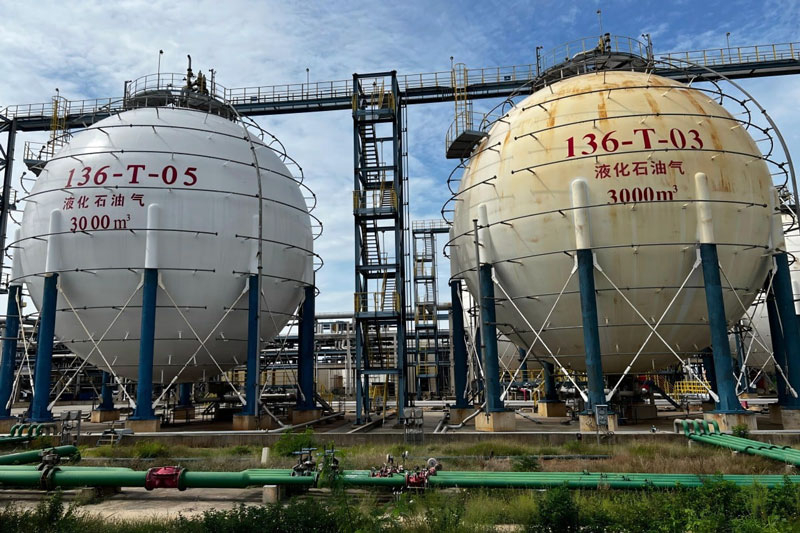
Researchers from the Harbin Institute of Technology and the China State Construction Engineering Corporation have developed a new cooling paint. The material utilizes a combination of light reflection and infrared radiation to lower surface temperatures without requiring electricity or water.
During summer field tests on a 3,000 cubic meter liquefied gas tank in Hainan, the coating reduced surface temperatures by 25 degrees Celsius compared to standard paint. The internal temperature of the tank was also 7 degrees Celsius lower. The passive cooling effect is equivalent to spraying 35 tons of water daily.
The paint is designed to reflect heat into space within the 8–13 micrometer range, where the atmosphere is transparent. In urban environments, the technology can lower indoor temperatures by 4 degrees Celsius, and by 1 degree Celsius in tropical regions.
Inspired by the structure of human skin, developers reduced the coating thickness from 500 micrometers to 100 micrometers. A production process has been established, allowing for an annual output of 600,000 tons of the material.