

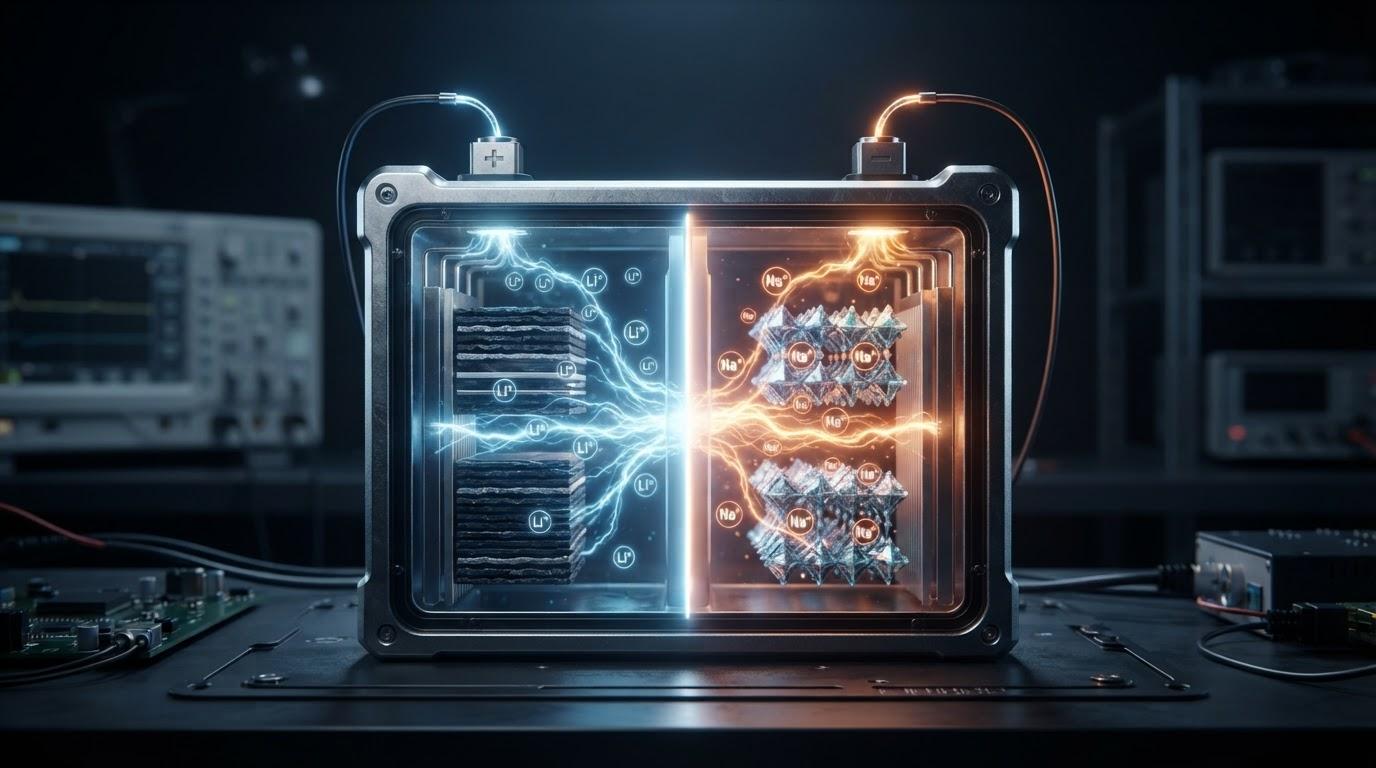
Researchers at the Southwest Research Institute (SwRI) have introduced a new metric called the Electrical Interchangeability Index (EII). This method is designed to evaluate whether sodium-ion batteries can effectively replace lithium-ion counterparts in specific devices without requiring extensive system redesigns.
Lithium-ion batteries currently dominate the market for portable electronics and electric vehicles due to their high energy density. However, rising lithium costs have spurred interest in sodium-ion alternatives, which utilize more affordable materials but often suffer from lower energy density, potentially leading to larger and heavier battery packs.
The EII metric goes beyond simple comparisons of voltage, capacity, or internal resistance. It analyzes real-world operational requirements to determine functional compatibility. A high EII score indicates that a direct swap is feasible, while a low score suggests that significant engineering changes would be necessary for the transition.
To validate the method, the team tested sodium-ion cells against standard 18650 lithium-ion batteries, which are widely used in power tools and electric vehicles. The testing process involved evaluating charge and discharge rates, voltage limits, heat generation, and power profiles across various operational modes.
The study identified specific scenarios where sodium-ion and lithium-ion cells perform similarly in terms of power output and thermal behavior. Conversely, it also highlighted conditions where direct substitution is not viable. This approach helps manufacturers decide when to adopt cheaper chemistry without unnecessary hardware modifications.



