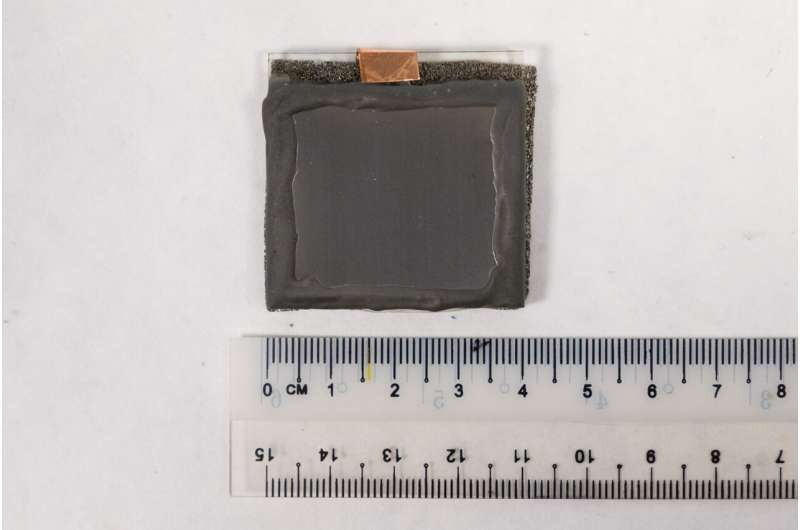
Researchers at Nanyang Technological University in Singapore have developed an artificial leaf device that produces hydrogen from seawater while removing hydrazine, a toxic industrial pollutant. The system operates using solar energy and does not require an external power source.
Unlike standard electrolysis, which produces oxygen, this device uses an anodic reaction to decompose hydrazine into hydrogen and nitrogen. This process consumes less energy and increases hydrogen output. The photoanode utilizes a catalyst made of iron, cobalt, and chromium to prevent the formation of toxic chlorine compounds.
The device features a lead-based halide perovskite photocathode protected by titanium foil and a conductive epoxy composite containing silver and copper particles. In tests, the system achieved a photocurrent density of 25 mA/cm2 and a hydrogen production rate of 466 micromoles per square centimeter per hour.
During a 72-hour stability test, the device effectively reduced hydrazine concentration from 0.5 moles to 0.5 parts per billion within 30 hours. This result is significantly below the 10 parts per billion safety limit set by the US Environmental Protection Agency.
The research team plans to expand this technology to target other water pollutants. The goal is to develop new catalysts that can simultaneously clean contaminated water and convert waste into valuable industrial raw materials and fuel.