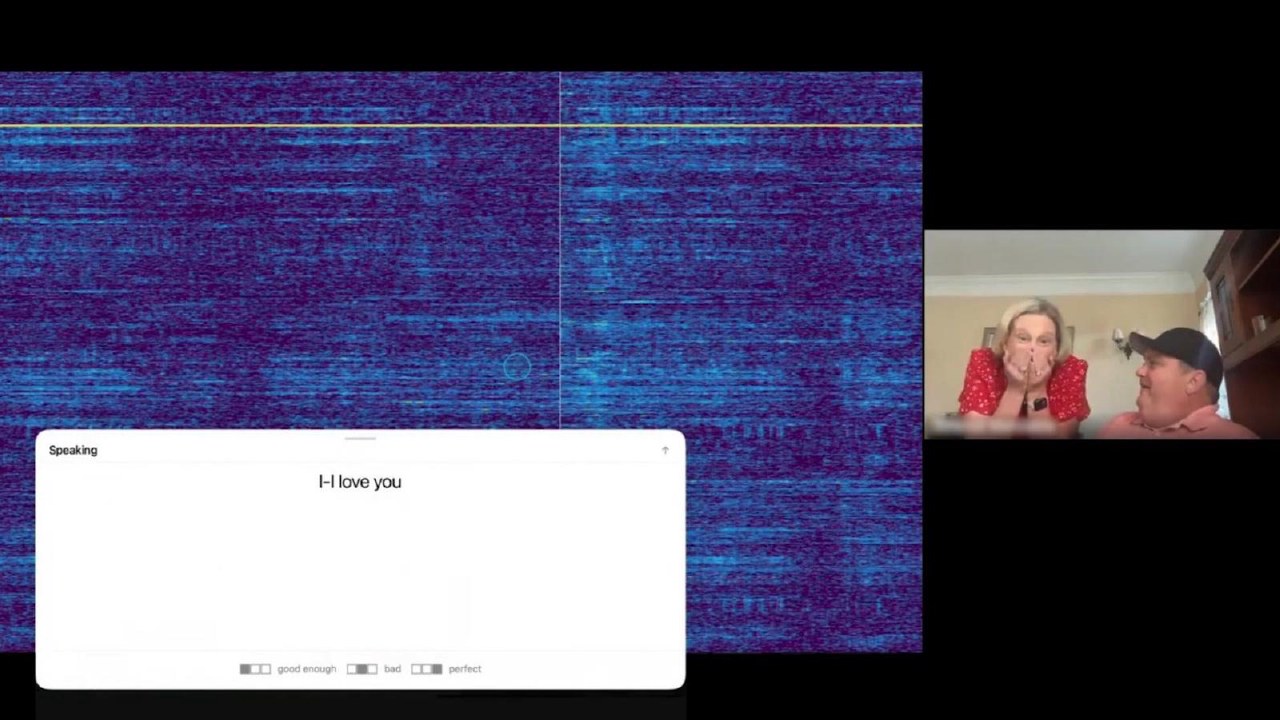
Neuralink has demonstrated its N1 wireless brain chip converting imagined speech into audible words. The patient, Kenneth Schock, who suffers from amyotrophic lateral sclerosis and received the implant in January, successfully triggered the system by mentally simulating the movement of his tongue and larynx to produce phonemes.
The demonstration featured a 23-second video where the system synthesized the phrase 'I love you' using a voice reconstructed to match Schock's original tone before his illness. The company emphasizes that the technology does not read spontaneous thoughts but requires deliberate mental effort, such as attempting to speak or move a cursor.
While previous research from institutions like the University of California, San Francisco and Stanford has explored brain-to-speech decoding since 2021, Neuralink focuses on miniaturizing this technology into a wireless device. The company aims to restore speech, though Elon Musk has previously discussed long-term goals involving conceptual telepathy.
The project remains in the research phase, facing significant challenges regarding surgical safety, electrode longevity, and battery reliability. Data privacy is also a major concern, as industry studies indicate that many neurotechnology companies may potentially monetize user brain data, raising questions about the security of neural information.