

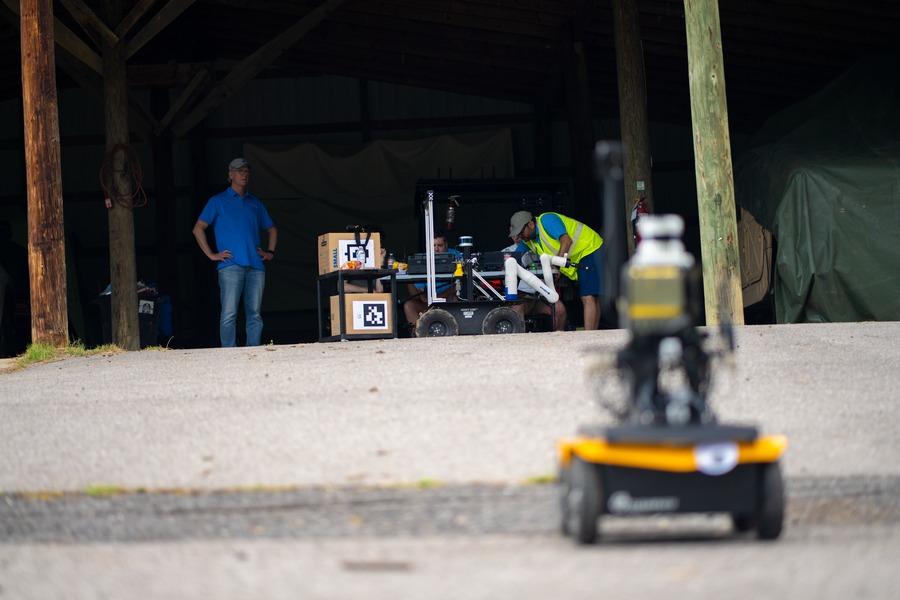
The NASA ASTRA team conducted field tests of a three-robot swarm in July. The system consists of one drone and two rovers with specialized equipment. The drone performs reconnaissance, while the first rover handles lidar mapping and navigation, and the second rover uses a robotic arm to collect samples.
During the mission, the swarm autonomously evaluates risks and potential scientific value. The software determines which robot is best suited for a specific task based on criteria such as equipment availability, distance to the target, travel speed, and the priority of new findings versus the original mission plan.
The test demonstrated the swarm's ability to switch tasks autonomously. When the lead drone identified a new area of interest, the system paused the current assignment and redirected another unit to investigate the discovery. This process allows the swarm to manage multiple scientific objectives without human intervention.
Bethany Theiling, lead researcher for ASTRA at the Goddard Space Flight Center, stated that the technology aims to provide missions with onboard decision-making capabilities. This is designed for scenarios where signal latency prevents manual control, such as missions to outer planets or operations in hazardous areas on the Moon and Mars.



