

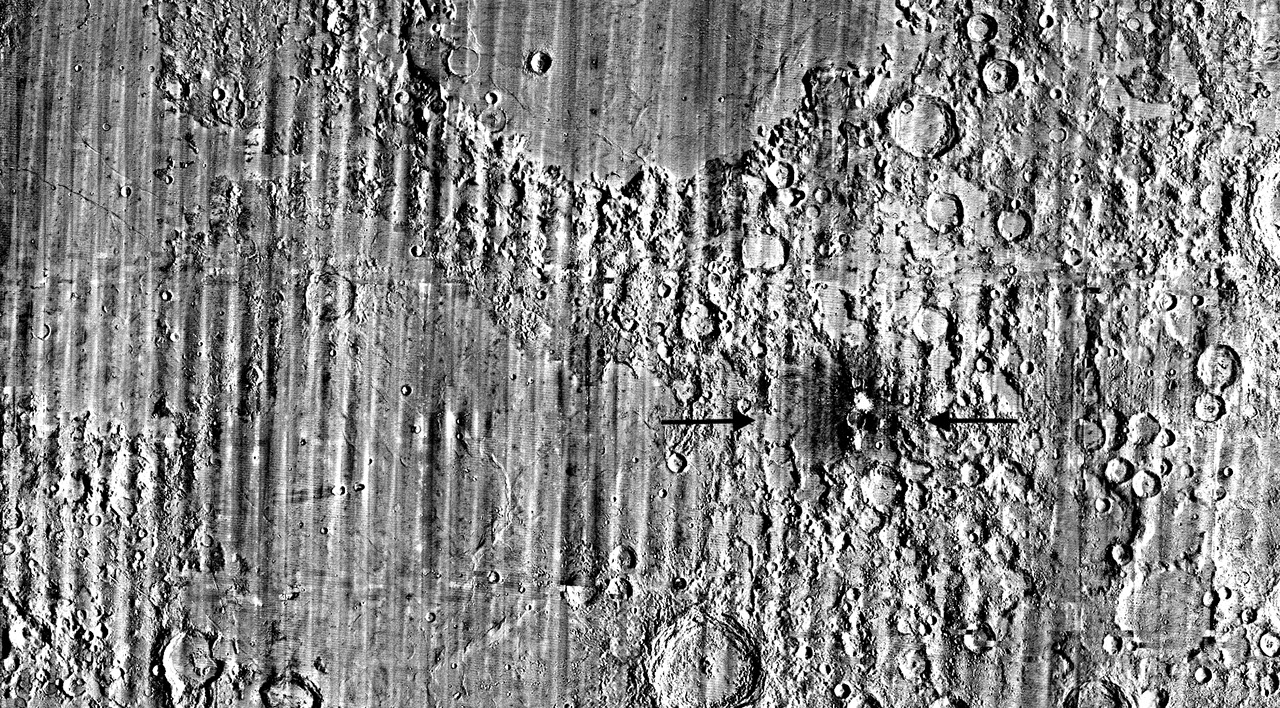
NASA’s Lunar Reconnaissance Orbiter (LRO) has identified a new lunar crater, named McGetchin, located on the Moon’s eastern edge. The crater was formed by the impact of a comet or asteroid between April 11 and May 22, 2024. The object responsible for the impact was estimated to be the size of a three- to six-story building.
The resulting crater measures 728 feet in width and 141 feet in depth. Scientists estimate that impacts of this magnitude occur on the Moon approximately once per century or less frequently. The discovery was made by Robert Wagner, an image-processing specialist, on October 24, 2025, during a routine data-quality check of lunar maps.
Follow-up observations using the Diviner thermal instrument revealed a 4-mile-wide area surrounding the crater that is 16 degrees Fahrenheit cooler at night than the adjacent terrain. Researchers attribute this temperature difference to the impact loosening the lunar regolith, which reduces its ability to retain heat.
The LRO spacecraft has been mapping the Moon for over 17 years, identifying at least 1,000 new impact craters and 100,000 surface changes during its mission. The LROC system captures images from an altitude of approximately 60 miles, enabling scientists to detect geological features such as landslides, seismic faults, and potential lava tubes.



