

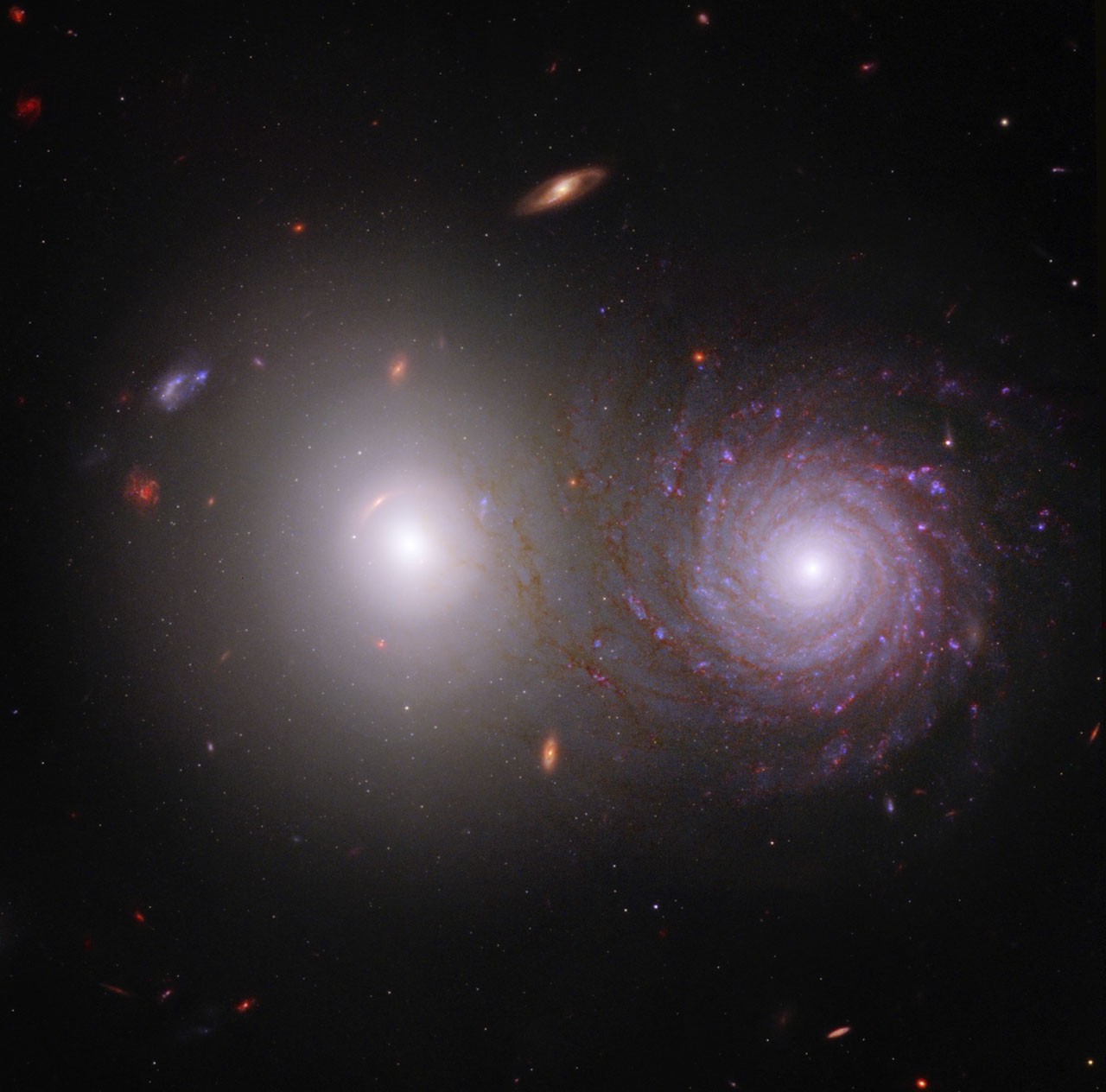
NASA has launched the Overlap Zoo project, a citizen science initiative focused on identifying overlapping galaxies. These rare cosmic alignments occur when two galaxies appear to line up from the perspective of Earth or space telescopes, allowing researchers to study the dust within the nearer galaxy.
The background galaxy acts as a light source, casting silhouettes of dust from the foreground galaxy. By analyzing these shadows, astronomers can map dust distribution and understand how it affects starlight. This data is essential for refining distance estimates to distant cosmic objects.
Project lead Trevor Butrum noted that the increasing volume of galaxy observations makes it difficult for professionals to classify every candidate pair. Volunteers will review images previously identified by the Galaxy Zoo project to verify galaxy pairs, classify their features, and outline them.
The goal of the project is to create a large-scale, accurate catalog of overlapping galaxy pairs. Participation is open to anyone with an internet-connected computer, and no prior experience is required to begin contributing to the research.



