

NASA issued a technical bulletin regarding the manufacturing of aluminum alloy 2219, highlighting risks associated with improper casting and forging. Defects such as disparate grain sizes and copper-rich intermetallics can compromise the material's mechanical properties and corrosion resistance.
The agency recommends implementing a homogenization step following direct chill casting to ensure uniform distribution of copper atoms. Research indicates that homogenization at 535 degrees Celsius for 10 hours effectively reduces segregation and improves the material's thermal response.
Verification of the homogenization process is advised using tools such as X-ray Diffraction or Differential Scanning Calorimetry. Micrographs are also suggested to confirm ingot quality before further processing.
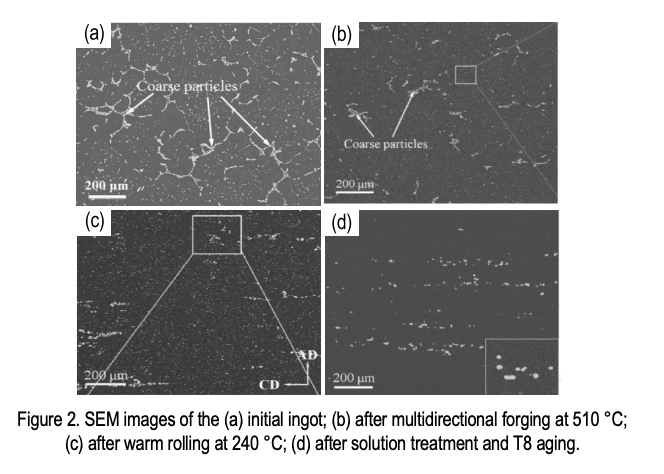
To enhance microstructure, NASA suggests multidirectional deformation, such as upset forging and rolling. Studies show that forging at 510 degrees Celsius followed by rolling at 240 degrees Celsius reduces grain size from 230 to 58.6 micrometers and improves strength.


