

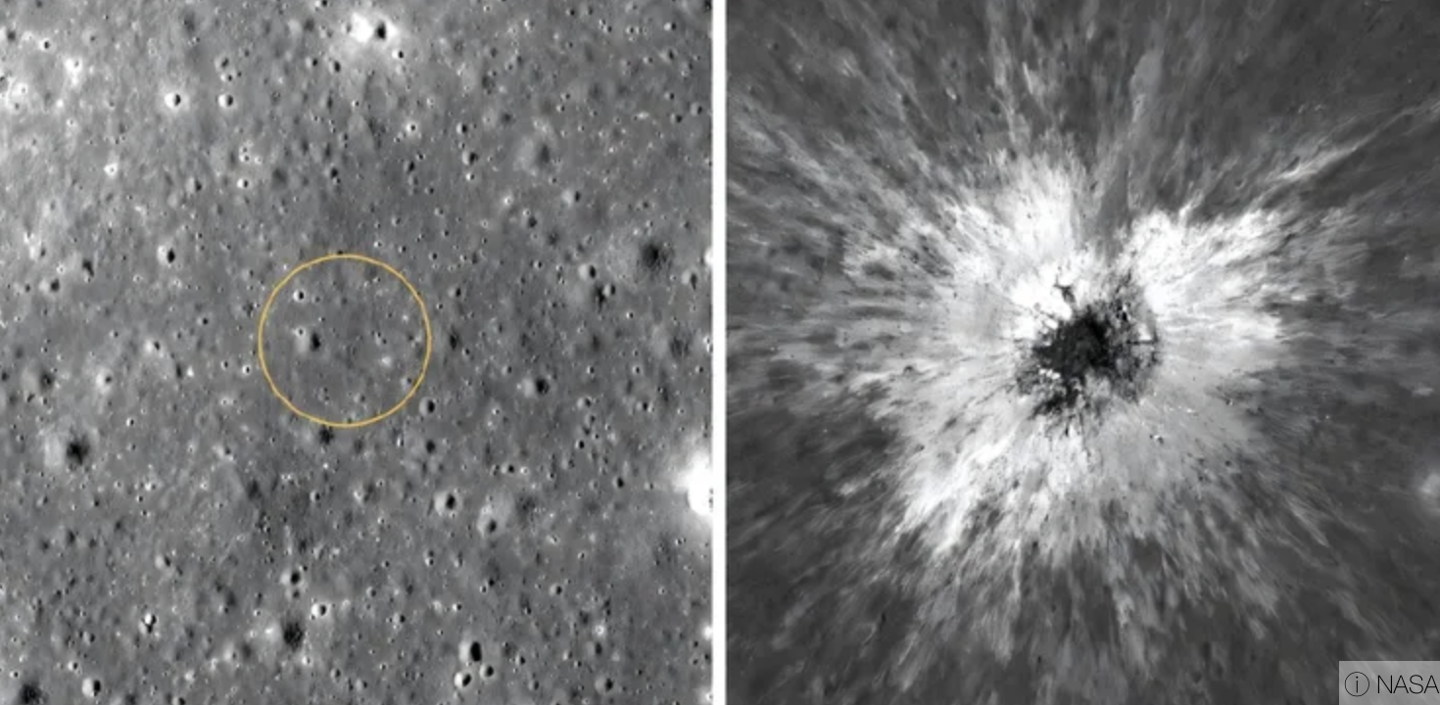
NASA has confirmed the formation of a new large crater on the Moon, identified by the Lunar Reconnaissance Orbiter (LRO) in 2025. The impact event occurred in 2024 and is currently considered the largest and most recent crater discovered in the solar system in recent years.
Named McGetchin, the crater measures approximately 222 meters in diameter and 43 meters in depth. Researchers believe it was caused by an asteroid or comet fragment, estimated to be the size of a building between three and six stories tall. The impact ejected debris over an area exceeding 100 kilometers.
Scientists estimate that impacts of this magnitude occur approximately once every 132 years. Given the plans for future human lunar bases, understanding such events and their associated risks has become a priority for the scientific community.
Since the impact was not detected in real-time, researchers are proposing future robotic missions to the site. The goal is to conduct on-site analysis of the geological structure, ejecta, and dust distribution to better understand the causes and environmental consequences of the collision.



