

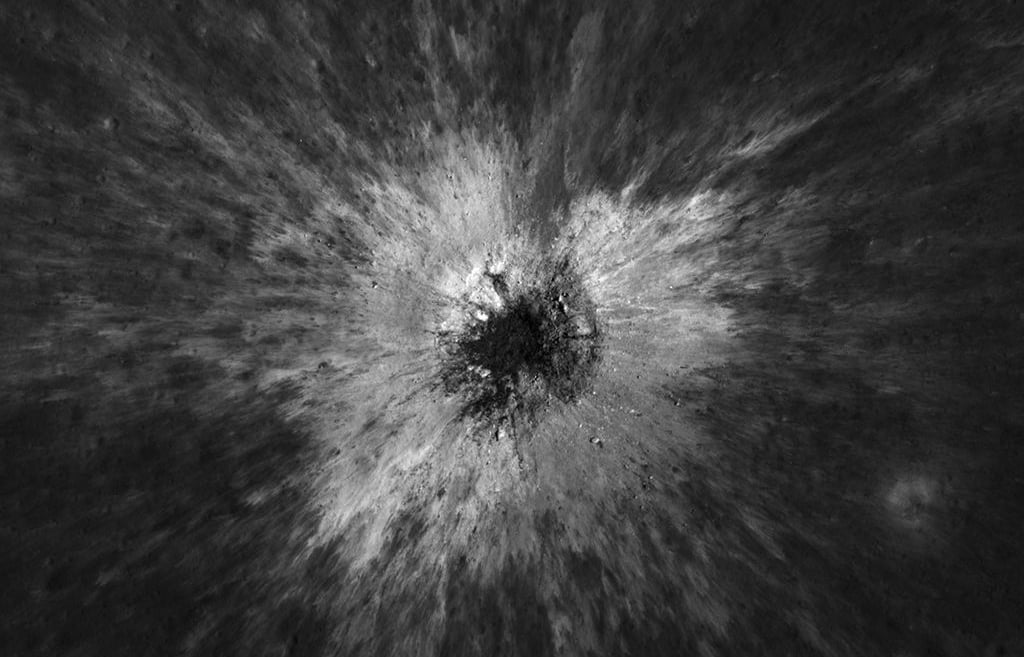
NASA’s Lunar Reconnaissance Orbiter (LRO) has identified the largest newly formed crater in the solar system, named McGetchin Crater. The impact occurred between April 11 and May 22, 2024, on the eastern edge of the Moon. The crater measures approximately 222 meters in width and 43 meters in depth.
Robert Wagner from Intuitive Machines discovered the crater on October 24, 2025, while analyzing data from the LROC Wide-Angle Camera. Scientists estimate the impactor was roughly the size of a three- to six-story building, likely a comet or an asteroid. Such impacts of this scale are expected to occur once per century.
The LRO Diviner instrument detected a 6.5-kilometer-wide area surrounding the crater that remains approximately 16 degrees Fahrenheit cooler than the environment during the lunar night. Researchers attribute this to the impact loosening the regolith, which increases heat loss in the affected region.
Over its 17-year mission, the LRO has cataloged at least 1,000 new impact craters and over 100,000 surface changes. The mission continues to utilize high-resolution imaging and thermal sensors to study lunar surface dynamics. Findings regarding McGetchin Crater have been published in the journal Science Advances.



