

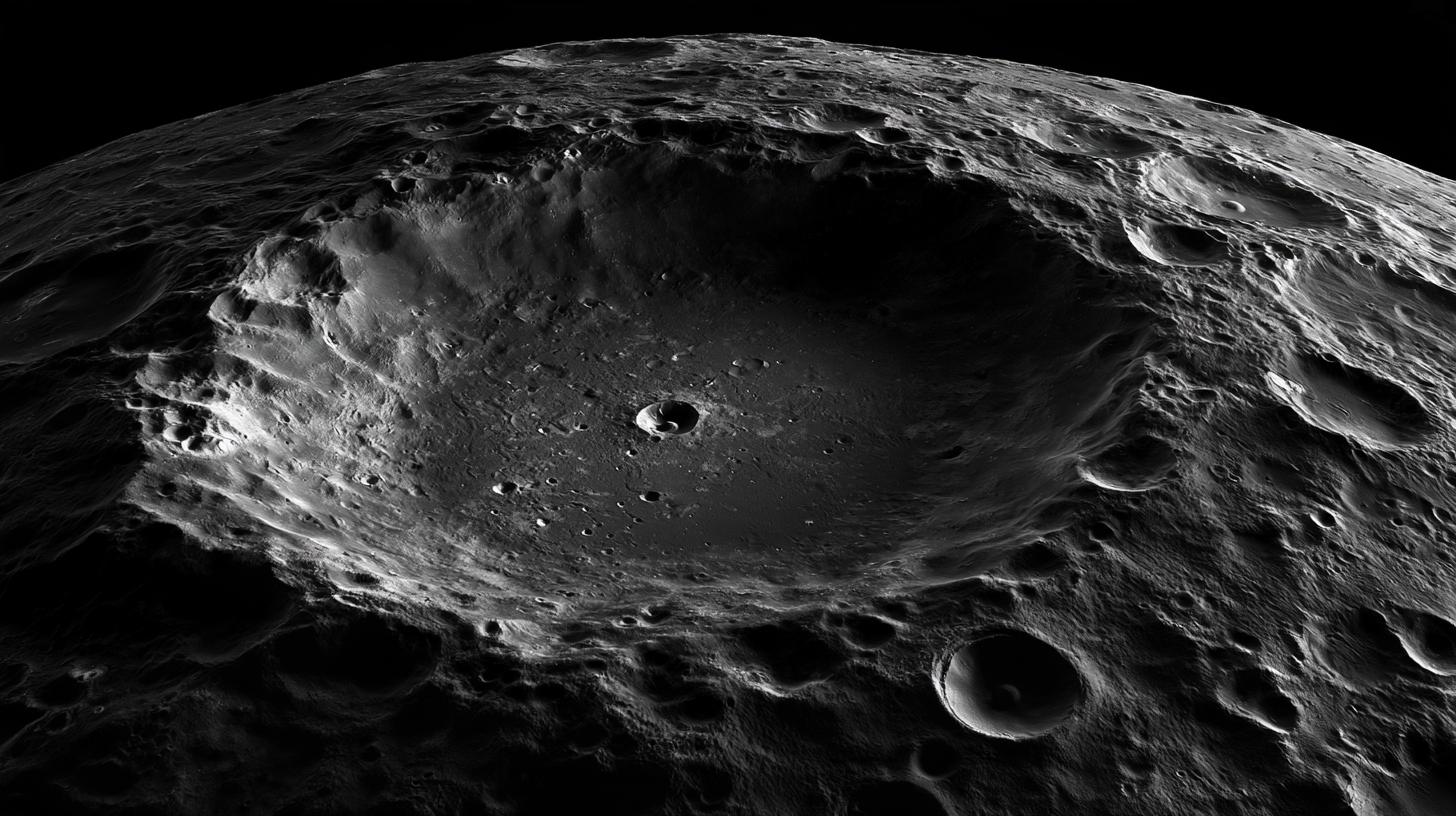
NASA identified a new impact crater on the Moon measuring 222 meters in diameter. The structure was discovered by comparing images captured by the Lunar Reconnaissance Orbiter. Specialists noticed the feature in the fall of 2025 using wide-angle camera data, while narrow-angle camera shots provided a detailed view of its geological composition.
According to the journal Science Advances, the crater formed in the spring of 2024. It currently ranks as the largest modern impact crater identified within the solar system. Researchers used this event to update existing models of crater formation and documented surface changes in the immediate vicinity of the impact site.
Scientific estimates suggest that an impact of this magnitude occurs on the Moon approximately once every 132 years. The lunar surface remains subject to constant bombardment by space objects, resulting in a vast number of craters across the satellite.
Current data indicates that the Moon hosts about 5000 craters with diameters ranging from 1 to 20 kilometers. Additionally, there are approximately 1 million structures measuring between 10 meters and 1 kilometer, and an estimated 1 billion smaller craters with diameters under 10 meters.



