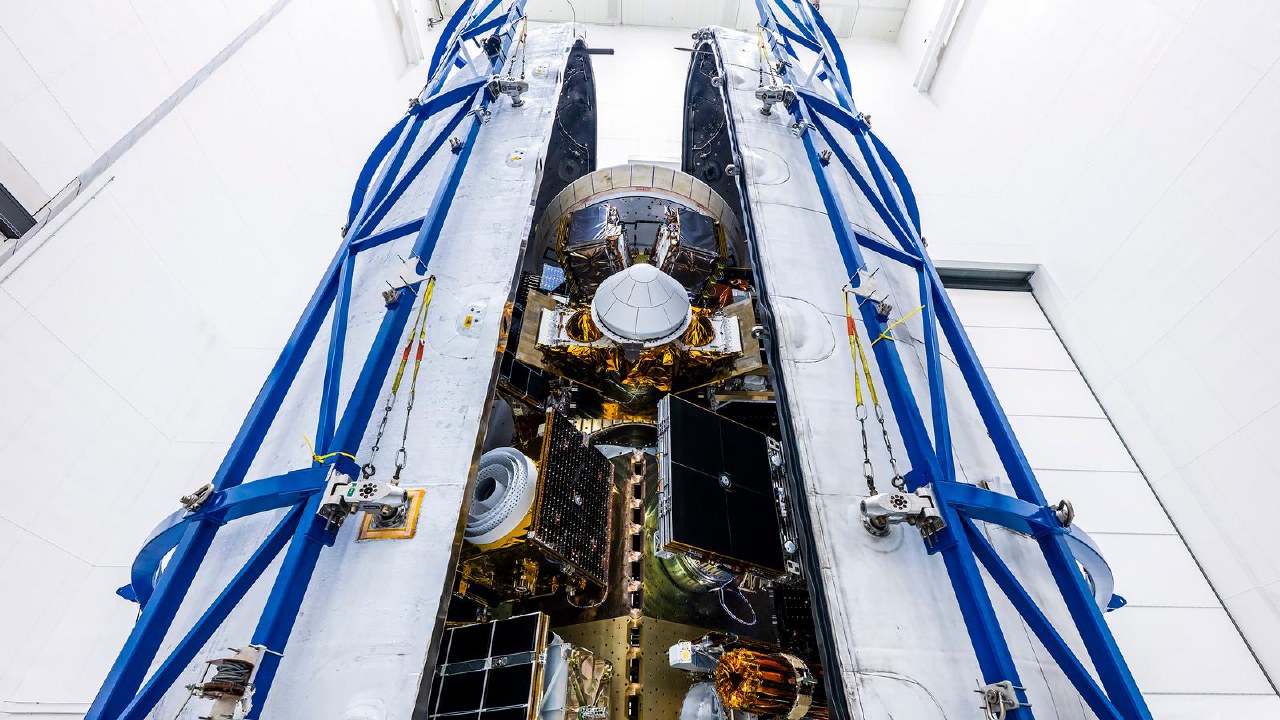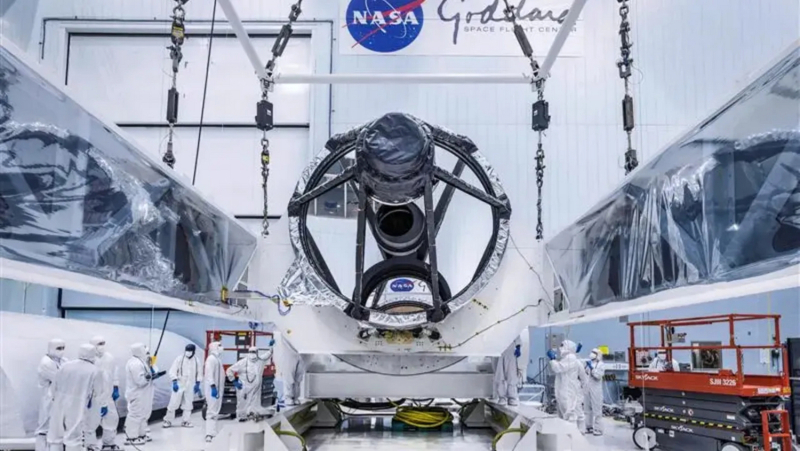
On August 30, 2026, NASA launched the Nancy Grace Roman Space Telescope from the LC-39A launch complex in Florida. The observatory is currently traveling to the L2 Lagrange point to study dark energy and exoplanets.
The project originated from the canceled JDEM program, which failed due to conflicting technical requirements and budget constraints. In 2010, the National Academy of Sciences merged these concepts into the WFIRST project, initially planned with a 1.3-meter mirror.
In 2011, the National Reconnaissance Office transferred two 2.4-meter optical assemblies to NASA, originally intended for the FIA-O satellite program. This hardware upgrade allowed for a 100-fold increase in the telescope's field of view compared to the Hubble Space Telescope.
Engineers modified the military-grade optics for infrared observations by re-polishing the mirrors and applying a 400-nanometer silver coating. The telescope's structure was also adapted to operate at a stable temperature of +9 degrees Celsius to minimize thermal interference.
The mission utilizes a Falcon Heavy rocket for launch. The trajectory design provides a significant fuel reserve, which allows for a potential 22-year extension of the mission duration.